Product evidence
How to Spray Foam Insulation Yourself, Step by Step From the Kit Manuals
How do you spray a one-component foam kit from the first can to the cleanup?
Read the guideProduct-claim library
Check what the product is meant to do, what its numbers describe and which documents support them. These guides help turn a listing into an evidence-based purchasing question.
Source-based education and research methodology, not installation approval or completed laboratory comparisons.
Product evidence
How do you spray a one-component foam kit from the first can to the cleanup?
Read the guide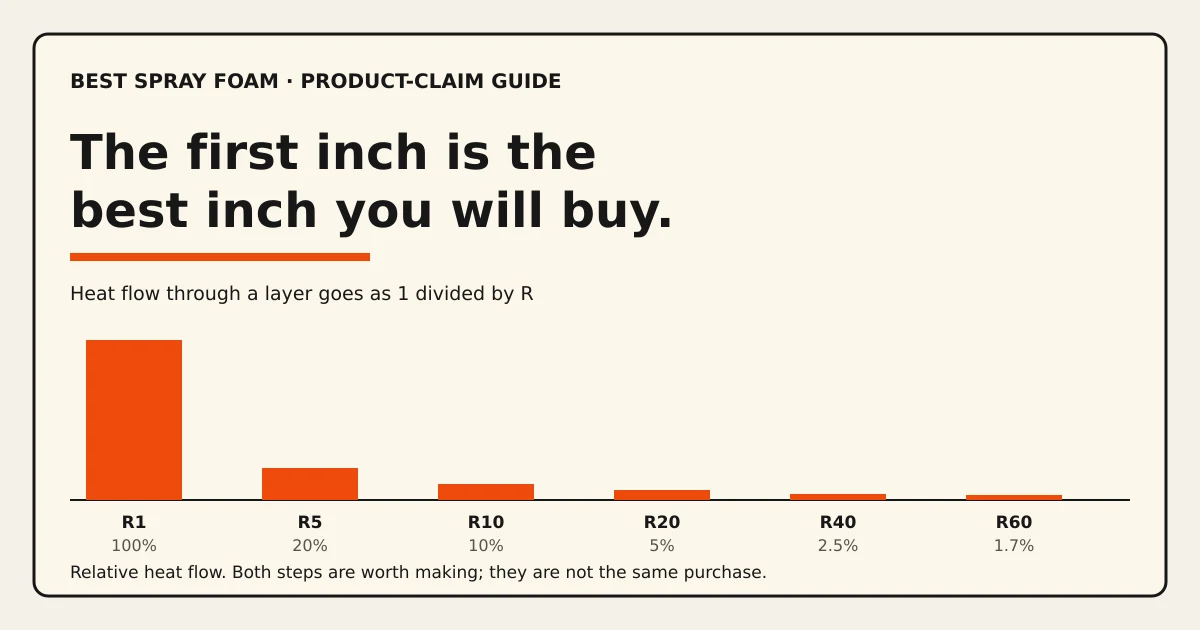
Product evidence
How many inches do you need, and what is the second inch worth?
Read the guide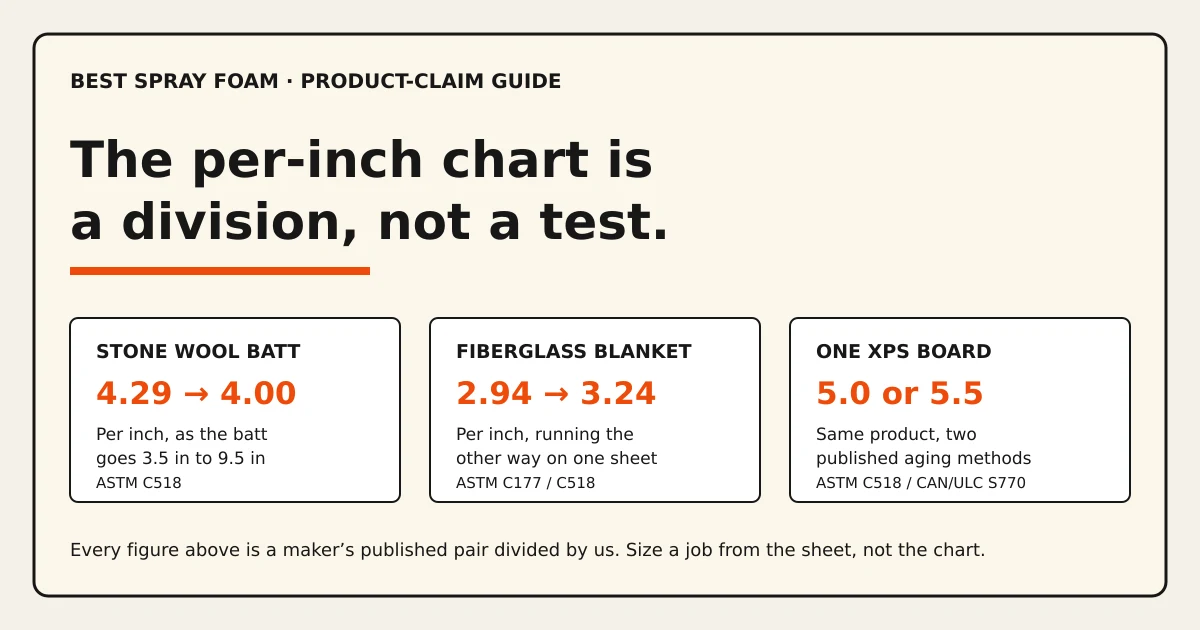
Product evidence
Why does one material have a different R-value per inch on every chart?
Read the guide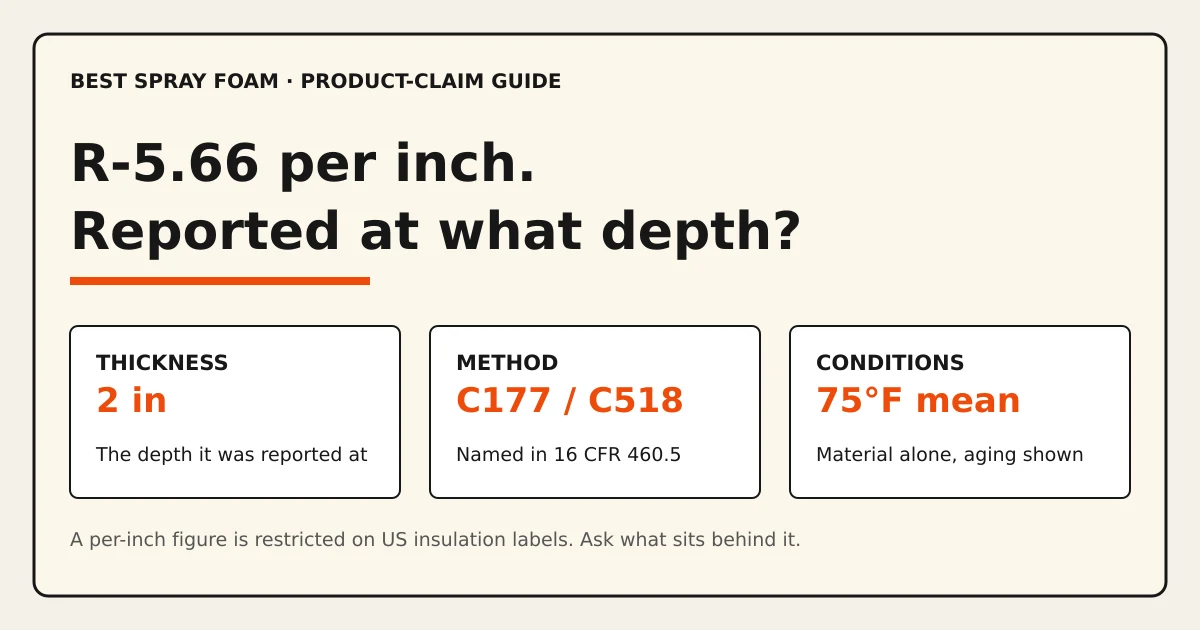
Product evidence
Can you compare two R-value claims at different thicknesses?
Read the guide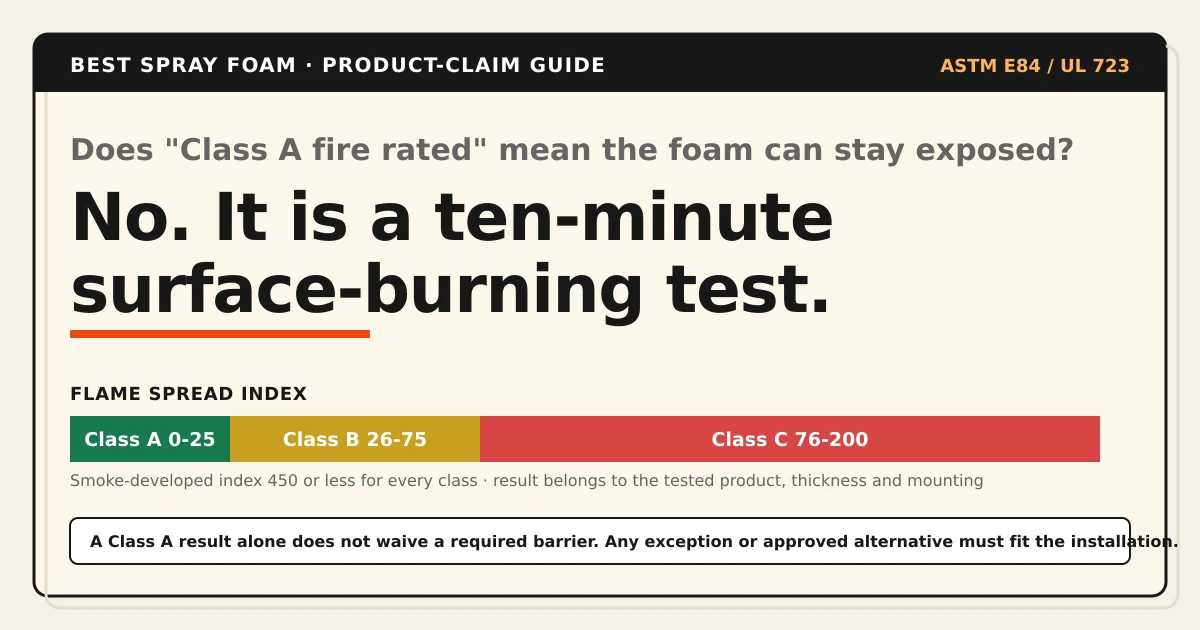
Product evidence
Does "Class A fire rated" mean the foam is safe to leave exposed?
Read the guide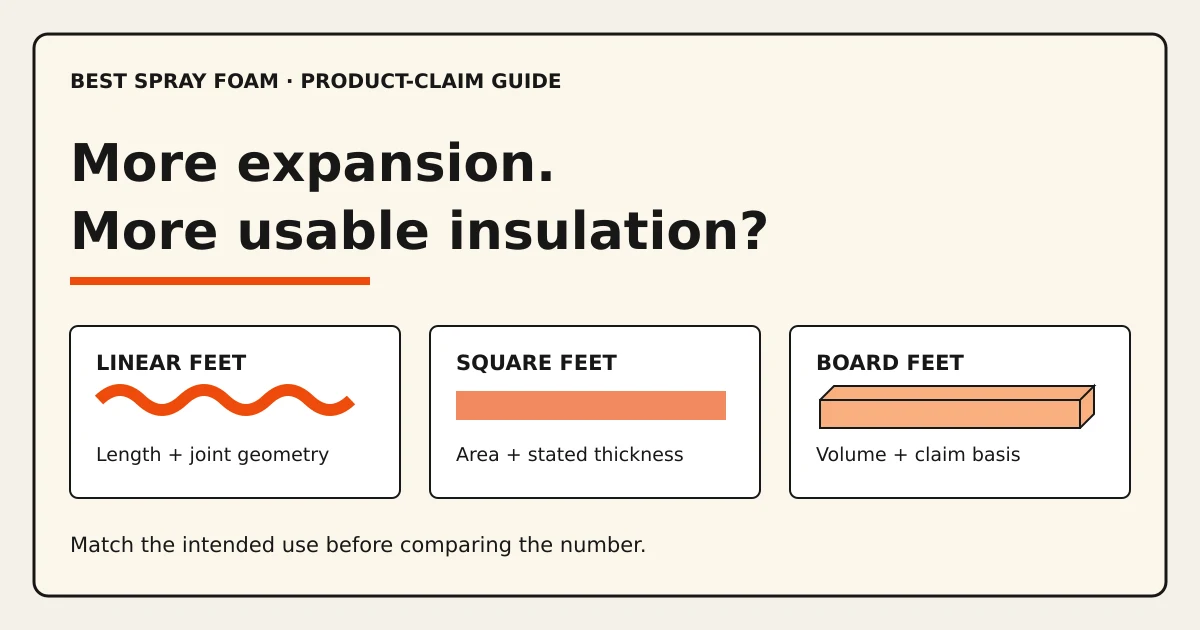
Product evidence
Does more visible expansion mean more usable insulation?
Read the guide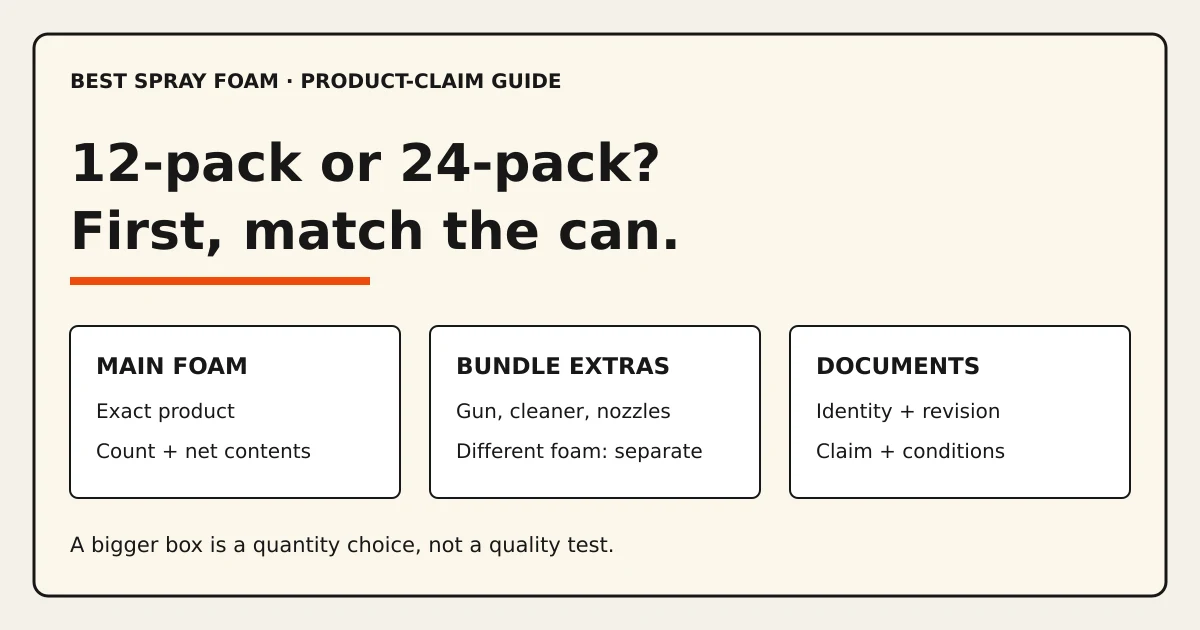
Product evidence
Are these two kits the same foam in different boxes?
Read the guide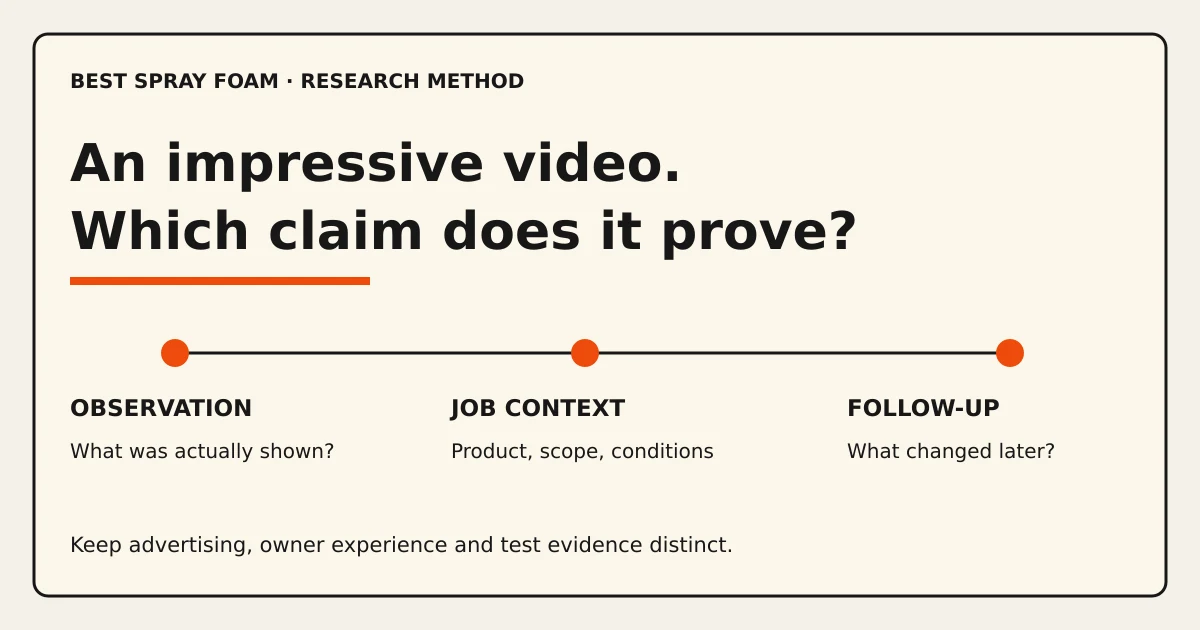
Research method
What can a five-star review or an expansion video actually prove?
Read the guideCommon purchasing mistake
A gap sealant can be a good product for its labeled joint or opening. It is not automatically a substitute for a continuous insulation layer. A broad spray pattern alone does not settle the difference either. Look for the exact intended use, finished thickness and documented properties.
Our coverage and yield guide uses actual manufacturer examples to explain the different units. It does not infer quality from price, advertising volume or manufacturing country.
Choose the right level of research
SprayFoamGuides, our sister publication under common ownership, explains which foam family belongs at each house detail, one- and two-component formats, cell types and R-value, thickness and volume. Its sealant decision guides cover pest block versus general gap foam, window and door versus general foam, straw, controlled-dispenser, and pro-gun systems, big-gap versus standard gap filler, fireblock foam versus firestop, and black foam applications. Beest's role is to connect the resulting purchasing question to exact products and evidence.
For product records, start with surface-spray kit research, foam sealants or two-component kits. The current research order is provisional, not a substitute for an accepted project specification.
Safety boundary
Exact labels, safety documents and qualified project assessment govern exposure controls, curing, re-entry and protective coverings. Neither an included mask nor a fire badge approves a work plan. Continue with SFG's ventilation and re-entry guide and fire-protection explanation.
Use SFG's assembly planner and professional-help guide first. We do not determine project suitability from how many cans fit in a shopping basket.
From the job to the finished wall
A garage ceiling, a rim joist and a van wall each ask for a different foam, thickness and cover. Start with the job.
Board feet are the area times the thickness. Price the kits that cover them against hiring the job out.
A kit, the gun and cleaner it works with, something to cover what stays clean, and the gear you wear.
Check the temperature, prepare the surface, spray in passes and cover the foam where people live.
The sheets give a tack-free time in minutes and a full cure in hours; only some say when people can go back in.