Slide to estimate

Spray Foam Coverage Meter

Slide your dimensions and thickness, add each surface of the job, and watch the gauge update board feet and cans with a planning margin.

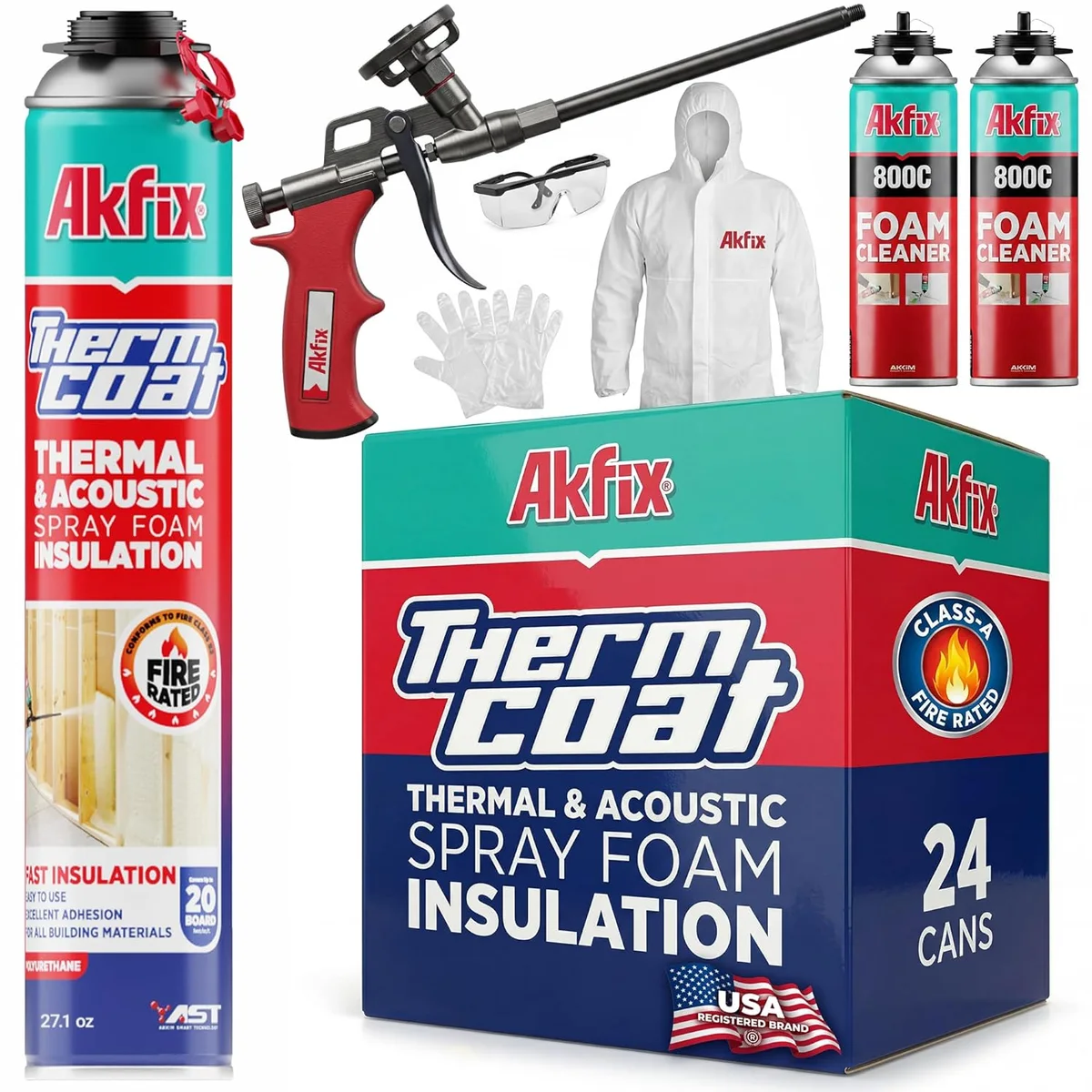
Most kits include a cleaner and a gun. Buying cans alone, add about 1 can of gun cleaner per 12 cans of foam as a planning allowance. Use the cleaner the gun maker names for that gun, and read its safety data sheet: it is an extremely flammable aerosol.

Coverage figures are manufacturer-rated under stated conditions. What lands on the surface can be less.

How the math works

Kits are rated in board feet - one board foot is one square foot sprayed one inch thick. So the job is area x thickness. For a roofline, the sloped surface is bigger than the footprint, so we multiply by a pitch factor. Divide the total by a can’s rated coverage (about 20 board feet) and round up. The optional 10% margin is the planning allowance both tracked makers suggest, applied to the can count.

About the R-value

This calculator does not estimate thermal performance. Use the exact product’s documented R-value at the intended thickness and stated test basis. Claims at unlike thicknesses are not directly comparable, and local thermal or ignition-barrier requirements remain separate questions.

A gap-filler can is not a spray foam insulation kit.

Cheap high-expansion "gap & crack" cans seal joints - they do not insulate an open wall, no matter how much they expand. The kits below are gun-applied surface insulation kits, the tool for insulating open cavities and surfaces. Whether foam suits a particular wall, ceiling or roofline assembly is a separate question, and the project pages take it up.

Ranked by evidence

Top 5 spray foam insulation kits

Our current order from documentation, buyer feedback and coverage - not ad spend.

See the full ranking

As an Amazon Associate I earn from qualifying purchases. That fee never sets the order or the score.

Questions answered from these records

Questions

Spray foam calculator FAQ

What is the difference between spray foam insulation and a gap filler?

They are different products. A gap-filler can (the Great Stuff style) lays a narrow bead to seal joints, cracks and penetrations - it is not designed to insulate an open wall. A spray foam insulation kit uses a gun to lay a wide, controlled layer across a whole surface for measured R-value. A filler that expands is not automatically insulation, so do not buy a gap filler for a wall.

How many cans of spray foam do I need?

Multiply the area (sq ft) by the thickness (inches) to get board feet, then divide by a can’s stated yield. This tool’s generic figure is 20 board feet for a 27 oz closed-cell can at 1 inch, the claimed figure most kits print; choose a product’s own yield where the tool offers it. A 200 sq ft wall at 1 inch is about 200 board feet, or roughly 10 cans, before a margin for waste.

How do I calculate spray foam for a roof?

A pitched roof has more surface than the footprint under it. Pick a Roofline surface and choose the pitch: we multiply the footprint by about 1.05 at 4/12, 1.12 at 6/12, up to 1.41 at 12/12, then apply your thickness.

Why should I buy more cans than the raw number?

A per-can coverage figure is the maker’s rated maximum under its stated conditions, and what lands on your surface can be less. Several makers in our tracked set suggest planning about 10% extra, so that margin is on by default. It is a planning allowance, not a measured loss rate.

How should I use R-value with this estimate?

Use this calculator for material volume only. For thermal performance, use the exact product’s documented R-value at the intended thickness and stated test basis. Do not create or multiply a per-inch figure unless appropriate product documentation supports it.
From the job to the finished wall

Plan the job in five questions

  1. Where are you insulating?

    A garage ceiling, a rim joist and a van wall each ask for a different foam, thickness and cover. Start with the job.

  2. What will it cost?

    Board feet are the area times the thickness. Price the kits that cover them against hiring the job out.

  3. What do you need?

    A kit, the gun and cleaner it works with, something to cover what stays clean, and the gear you wear.

  4. How do you do it?

    Check the temperature, prepare the surface, spray in passes and cover the foam where people live.

  5. How long does it take?

    The sheets give a tack-free time in minutes and a full cure in hours; only some say when people can go back in.