Best by project · Based on the 2021 IRC; your local code may differ

Best Spray Foam Insulation for Vans and RVs

A vehicle conversion has different requirements from a building project. Read the exact label, then check what applies to the vehicle.

Product examples · not ranked

The products on this page

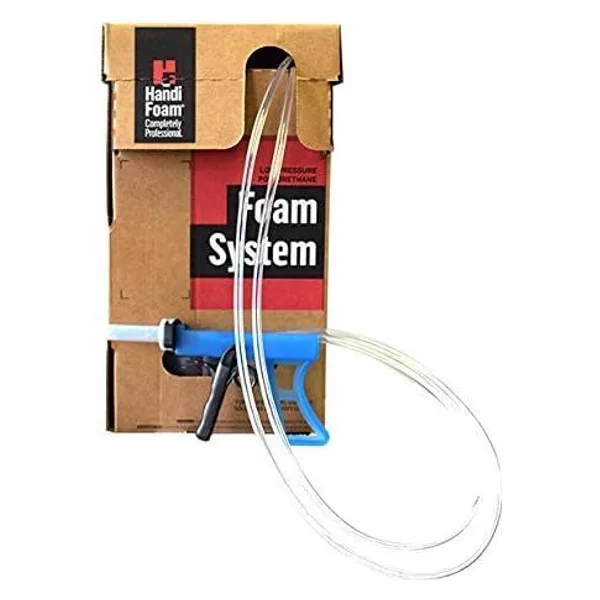
  1. HandiFoam FR (HFO) II-200 and II-600 product photoHandiFoam FR (HFO) II-200 and II-600See it on Amazon
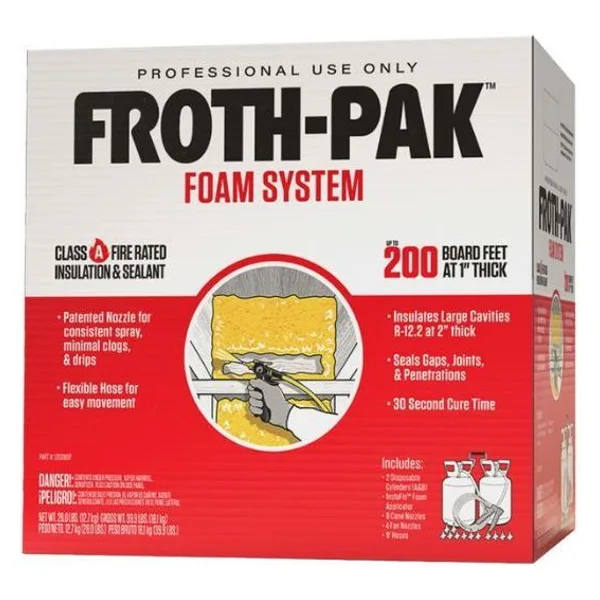
  2. DuPont Froth-Pak 200 Foam System product photoDuPont Froth-Pak 200 Foam SystemSee it on Amazon
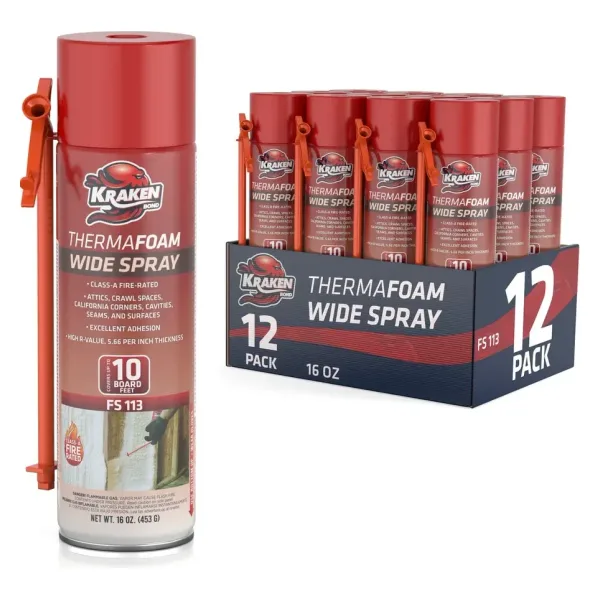
  3. Kraken Bond ThermaFoam Wide Spray product photoKraken Bond ThermaFoam Wide SpraySee it on Amazon

As an Amazon Associate I earn from qualifying purchases.

A van has no studs, and the residential code sections quoted elsewhere on this site govern buildings rather than vehicles. The cavity is the depth of the rib, often 1 to 1.5 in, the substrate is painted steel that sweats, and the space is a few hundred cubic feet with one door. Foam is attractive in a van for three reasons: it sticks to metal, it acts as a vapor retarder against the skin, and it leaves no gaps. Those same properties are why The exact product label sets the application conditions, and the vehicle, state, local and insurance requirements for a conversion sit on top of it. The residential code that limits foam in a house does not reach a vehicle.

What applies instead is the maker’s statement. DAP’s Wall & Cavity can says interior use only. Every kit lists metal among its substrates. HandiFoam names recreational vehicles and commercial vehicles on its own list. Only one single-can kit names vehicles at all: Kraken Bond FastCoat lists walls, ceilings, attics, garages, HVAC systems and vehicles among its uses. The rest are silent on them. The temperature range on every sheet, 41 to 86 F for most cans, is a real limit in a van in July.

Assembly, moisture and code planning for this job is at our sister publication under common ownership: Van, trailer and RV assembly planning, at Spray Foam Guides. This page stays with exact products and the records their makers publish.

The assembly decides the product

What decides the product before you pick a brand

Thickness

A van rib gives 1 to 1.5 in, which is the one place where a per-inch claim sits close to the depth it was reported at, so the published numbers are worth reading side by side: 5.66 for the canned kits against DAP’s aged 4.1, both stated for one inch. Neither was measured at 1.5 in, so treat the extra half inch as unproven rather than as half again the R.

Condensation

Warm humid air meets cold steel, and where it does the water appears. Which assembly avoids that depends on interior humidity, ventilation, the thermal bridges at the ribs and the vapor permeance of what you install, not on the foam type alone. The products sold for van skins are the low-perm closed-cell ones, and the published perm rating at your thickness is the number to compare.

Which rules apply

The IRC governs buildings, and manufactured RVs are built to NFPA 1192 through RVIA certification. A self-built conversion has neither. That does not mean you are unregulated: federal motor-vehicle rules, your state’s vehicle and titling rules, your insurer and any campground you use all set their own requirements. Foam plastic still burns; keep it away from the exhaust, the heater and the cooking area, and cover it.

Ventilation

A van is the smallest enclosed space anyone sprays foam in. Open doors alone do not establish adequate ventilation or safe reoccupancy: the exact product’s label and safety data sheet set the ventilation, respirator, isolation and re-entry conditions, and those are the conditions to meet, not a rule of thumb about sessions.

What the code says

The provisions that apply, and the numbers they use

Section numbers are from the 2021 International Residential Code. Your city or county adopts one edition of the code and changes parts of it, and your local building official has the final word. A thermal barrier and an ignition barrier are different things, and the glossary explains both.

NFPA 1192Standard on Recreational Vehicles, applied to manufactured RVs through RVIA certification; it does not govern a self-built conversion.
Not the IRCThe residential code’s thermal barrier, ignition barrier and R-value tables address buildings rather than vehicles. In a self-built conversion the product label and safety data sheet are the written limits we can point to; vehicle, insurance and local requirements are outside our scope and worth asking about.

Products that document this job

What the tracked products say about it, in their own documents

Listed by product family. Each line says why the product is on this list, always from something the maker published. Follow the link for the documents, the questions still open, and dated prices.

Canister systems

  • HandiFoam FR (HFO) II-200 Recreational vehicles, trailers and commercial vehicles are on its own application list; 0.9 perm at 1 in is the vapor property a metal skin needs.
  • Froth-Pak 200 Metal is a named substrate and 200 sq ft at 1 in is a whole van; the PPE list is the one to follow in a closed vehicle.

Single-can kits

  • Ranked insulation kits A 12-pack claims 240 board feet, which covers a van’s walls and ceiling at 1 in; no kit label mentions vehicles, so the temperature range and thickness per pass are the limits to read.

Wide spray

  • Kraken Bond ThermaFoam Fan pattern for the ribs and the awkward panels; a 12-pack of 16 oz cans at 10 board feet each.

Foam sealants

Where foam is not the answer
  • Anywhere near the exhaust, the heater, the cooktop or the battery bank. Foam plastic burns. The residential code sections on this site govern buildings, not vehicles, and a conversion has its own vehicle, state, local and insurance requirements; confirm the exact product is suitable for the vehicle, the substrate and the assembly before it goes near a heat source.
  • The floor, if it must stay serviceable, and any panel that will need to come off. Cured foam bonds to steel; removal is mechanical.
  • A van you cannot ventilate while spraying, or one parked in the sun in summer; the can sheets we hold stop at 86 F, and DAP’s at 120 F.

Quantity, worked once

Cargo van, walls and ceiling, 1 in against the skin

Board feet are square feet times inches. The kit figures are the makers’ theoretical yields, which every maker that defines the term says are laboratory numbers; plan on less.

  1. Wall and ceiling skin area about 180 sq ft between ribs
  2. At 1 in: 180 board feet; at 1.5 in in the rib depth: 270
  3. A 12-can kit claims 240 board feet; Froth-Pak 200 claims 200 sq ft at 1 in
  4. ThermaFoam at 10 board feet per can for the ribs and edges: 4 to 6 cans

One 12-can kit or one Froth-Pak 200 does the skin, with a few wide-spray cans for the ribs. Spray it with both doors open and leave the van to cure empty.

Run your own numbers in the calculator

Questions

Vans and RVs, answered from the records above

Is spray foam safe in a camper van?

The makers name vehicles and metal among the uses, and the safety information that applies is on that product’s label and safety data sheet. The risks worth planning for are during spraying, in a space with one door, and afterwards near heat sources, where the building code that would normally call for a barrier does not apply. Ventilate as the label says, follow the protective equipment it lists, keep foam away from exhaust, heater and cooktop, and cover it.

Which foam for the metal skin?

The products sold for this are the low-perm closed-cell ones: HandiFoam FR prints 0.9 perm at 1 in and lists recreational vehicles among its uses. Condensation in a van is an assembly problem, so plan the humidity, the ventilation and the bridges at the ribs alongside the foam.

From the job to the finished wall

Plan the job in five questions

  1. Where are you insulating?

    This page answers it for vans and RVs. The same five questions run for every other part of the house.

  2. What will it cost?

    Board feet are the area times the thickness. Price the kits that cover them against hiring the job out.

  3. What do you need?

    A kit, the gun and cleaner it works with, something to cover what stays clean, and the gear you wear.

  4. How do you do it?

    Check the temperature, prepare the surface, spray in passes and cover the foam where people live.

  5. How long does it take?

    The sheets give a tack-free time in minutes and a full cure in hours; only some say when people can go back in.

We have not sprayed or tested any product on this page, and nothing here stands in for the label, the safety data sheet or what your local inspector tells you.