Comparison · read from the product records
Fire Block Foam vs Regular Foam: What the Orange Can Documents That the Other Does Not
We set each brand’s fire block can beside the same brand’s gap filler and read both sheets. The color and the name are the visible difference. On paper, 2 of the 6 fire block cans here carry a fireblocking evaluation, and 2 of the 6 gap fillers print a surface-burning result of their own.
The short answer
Which one, and when neither
-
A fire block can, where the code calls for fireblocking, and one with an evaluation behind it
Where pipes and wires pass through wood fireblocking and an inspector will look, buy the can whose fireblocking claim has a report number. In this set that is TYTAN Fire Block Extreme or Fire Block 113: ICC-ES ESR-3302 evaluates both under AC546, within its limits, which are Type V-B construction, non-rated construction under the IRC, and a cap on exposed foam per square foot of wall. An orange can without a report is a gap filler with a surface-burning figure, however it is labeled.
-
The gap filler, for an air leak that is not a fireblocking location
The fire paperwork buys nothing that job needs, so choose on the gap and the can. Price does not settle it either way: of the 6 brand pairs we could price in the same pack, the fire block can cost less per ounce in 4 and more in 2.
-
Neither, in a rated wall or around a firestop penetration
Fireblocking is not firestopping. No can on this page is a firestop system, and TYTAN’s sheets say so about their own fire block foams. A penetration through a fire-resistance-rated wall, floor or ceiling needs a listed firestop system, which is a different product.
On paper
Three counts, from the sheets
2 of 6 fire block cans carry an ICC-ES fireblocking evaluation
2 of 6 gap fillers print a UL 723 surface-burning result of their own
4 of 6 brand pairs priced in the same pack have the fire block can as the cheaper ounce
Fireblocking, in the residential code, keeps flame and hot gases from travelling through the concealed spaces in wood framing. A firestop is a tested system for a penetration through a fire-resistance-rated wall or floor, and no can on this page is one. A UL 723 or ASTM E84 figure says how a foam surface burns in a tunnel test; it does not say whether foam in a hole holds fire back between two spaces, which is what a fireblocking evaluation tests. The color is there so an inspector can recognize the can. The fire block page reads each can by that standard.
Brand by brand
Each fire block can beside the same brand’s gap filler
The two cans in each card come from one maker and one delivery, straw or gun, so the difference between them is the one the maker chose to make. Prices are compared only in a pack both cans are sold in.
As an Amazon Associate I earn from qualifying purchases.
TYTAN Professional
Fire Block Extreme against Fill All
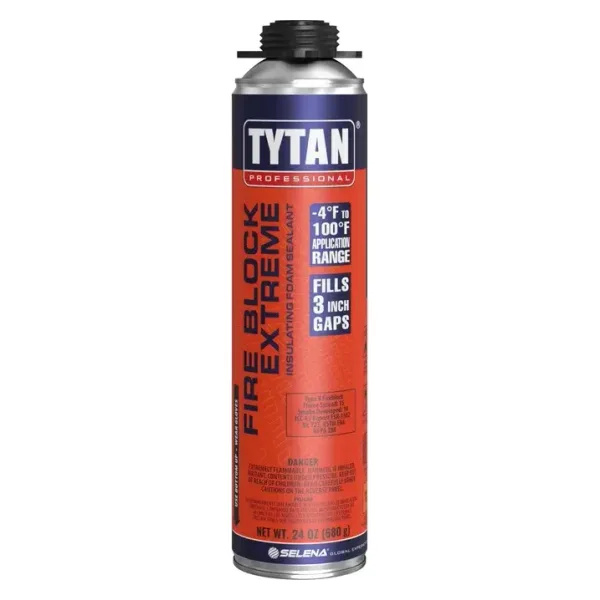
- UL 723 result
- Flame spread 15, smoke developed 10
- Tested thickness
- Not stated
- DIN 4102 class
- B3
- ICC-ES listing
- No listing
- Fireblocking evaluation
- ESR-3302 Under AC546, within its limits
- Data sheet
- Dated data sheetThe gun sheet names the 24 oz PRO gun can and the straw sheet names the 12 oz straw can, so each can has its own dated sheet
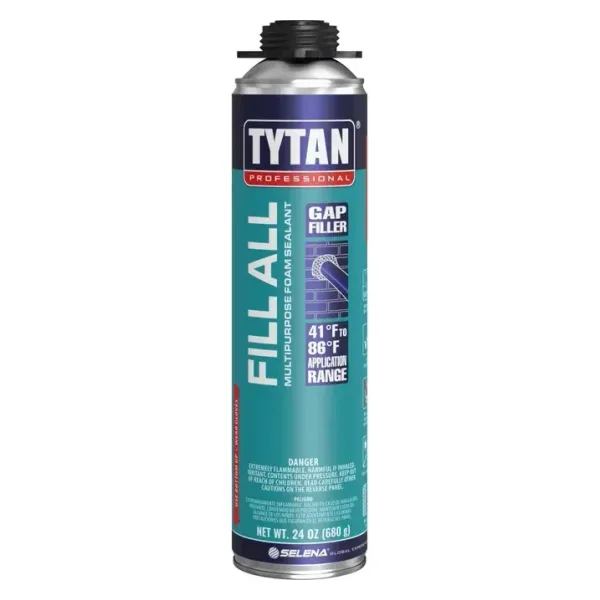
- UL 723 result
- Flame spread 15, smoke developed 10
- Tested thickness
- Not stated
- DIN 4102 class
- B3
- ICC-ES listing
- No listing
- Fireblocking evaluation
- No evaluation
- Data sheet
- Dated data sheet
What the fire block can adds on paper
- An ICC-ES fireblocking evaluation: ESR-3302
The gap filler prints the same UL 723 result as the fire block can.
Price per ounce, same pack
- 12 x 24 oz: $111.00 against $129.00
The fire block can is cheaper per ounce in the same pack.
TYTAN Professional
Fire Block 113 against Fill All
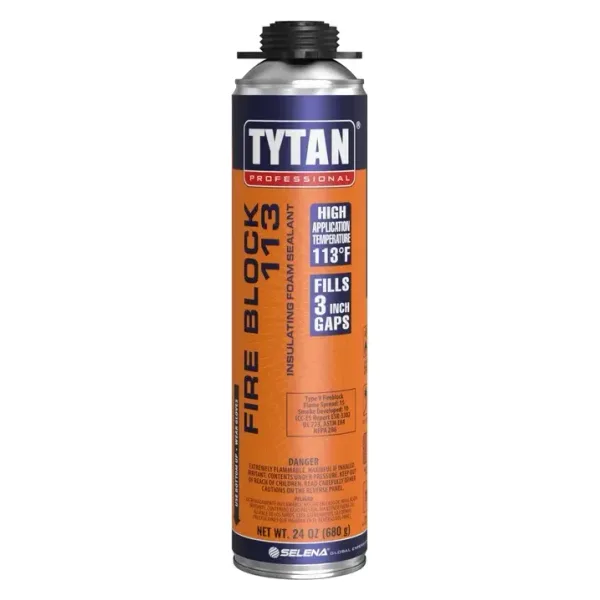
- UL 723 result
- Flame spread 15, smoke developed 10
- Tested thickness
- Not stated
- DIN 4102 class
- B3
- ICC-ES listing
- No listing
- Fireblocking evaluation
- ESR-3302 Under AC546, within its limits
- Data sheet
- Dated data sheetThe sheet names the 24 oz PRO gun can, which is the can in the listing here
- UL 723 result
- Flame spread 15, smoke developed 10
- Tested thickness
- Not stated
- DIN 4102 class
- B3
- ICC-ES listing
- No listing
- Fireblocking evaluation
- No evaluation
- Data sheet
- Dated data sheet
What the fire block can adds on paper
- An ICC-ES fireblocking evaluation: ESR-3302
The gap filler prints the same UL 723 result as the fire block can.
Price per ounce, same pack
- 12 x 24 oz: $107.00 against $129.00
The fire block can is cheaper per ounce in the same pack.
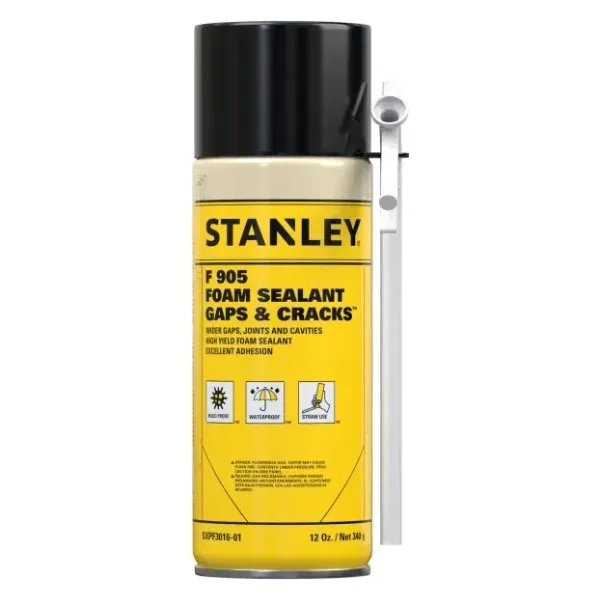
Stanley
F952 Fire Block against F905 Gaps & Cracks
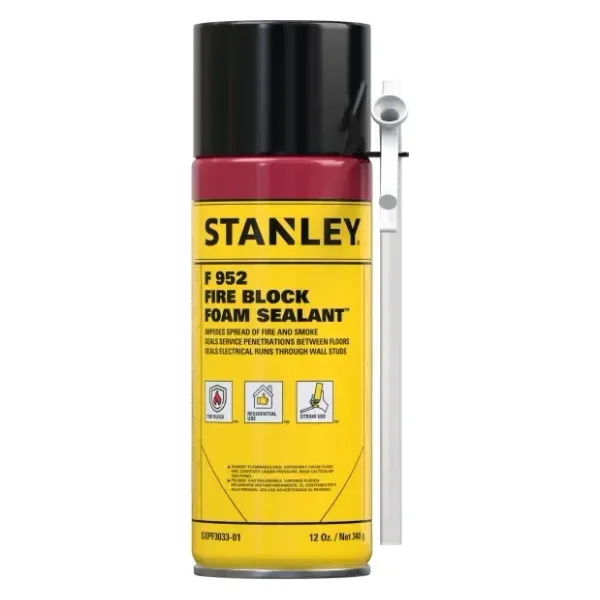
- UL 723 result
- Flame spread 10, smoke developed 15
- Tested thickness
- Not stated
- DIN 4102 class
- B2
- ICC-ES listing
- ESL-1058 Surface burning only
- Fireblocking evaluation
- No evaluation
- Data sheet
- Dated data sheet
- UL 723 result
- Flame spread 10, smoke developed 20
- Tested thickness
- Not stated
- DIN 4102 class
- B3
- ICC-ES listing
- No listing
- Fireblocking evaluation
- No evaluation
- Data sheet
- Dated data sheet
What the fire block can adds on paper
- An ICC-ES listing for surface burning only, not for fireblocking: ESL-1058
- A better German DIN 4102 class, which has no US equivalent: B2 / B3
Both sheets print a UL 723 result, with different figures.
Price per ounce, same pack
- 2 x 12 oz: $23.99 against $18.99
The gap filler is cheaper per ounce in the same pack.
Stanley
F952P Fire Block Pro against F905P Gaps & Cracks Pro
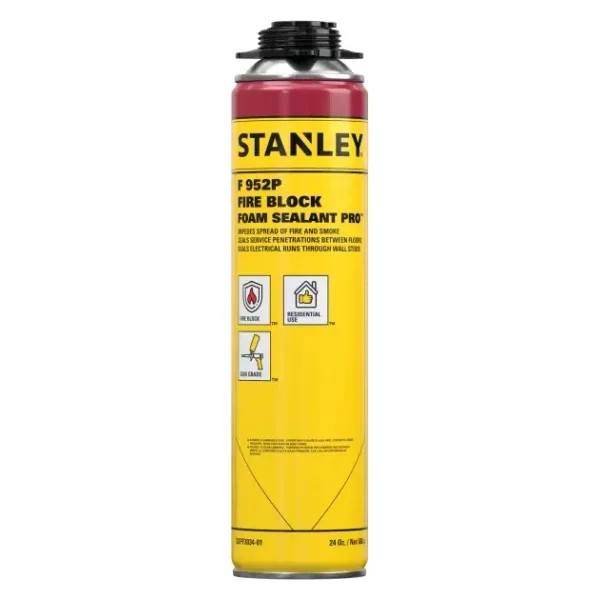
- UL 723 result
- None on the sheet
- Tested thickness
- No result to state it for
- DIN 4102 class
- B2
- ICC-ES listing
- ESL-1058 Surface burning only
- Fireblocking evaluation
- No evaluation
- Data sheet
- Dated data sheet
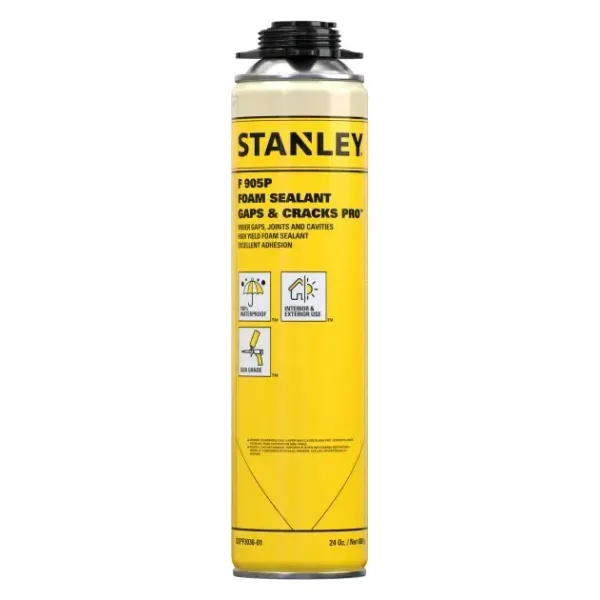
- UL 723 result
- None on the sheet
- Tested thickness
- No result to state it for
- DIN 4102 class
- B3
- ICC-ES listing
- No listing
- Fireblocking evaluation
- No evaluation
- Data sheet
- Dated data sheet
What the fire block can adds on paper
- An ICC-ES listing for surface burning only, not for fireblocking: ESL-1058
- A better German DIN 4102 class, which has no US equivalent: B2 / B3
Price per ounce, same pack
- 2 x 24 oz: $25.99 against $26.99
The fire block can is cheaper per ounce in the same pack.
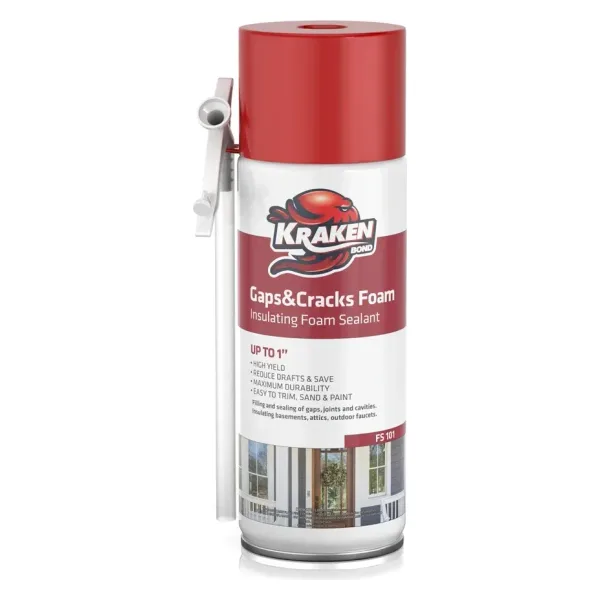
Kraken Bond
Extreme Fire Block against Gaps & Cracks
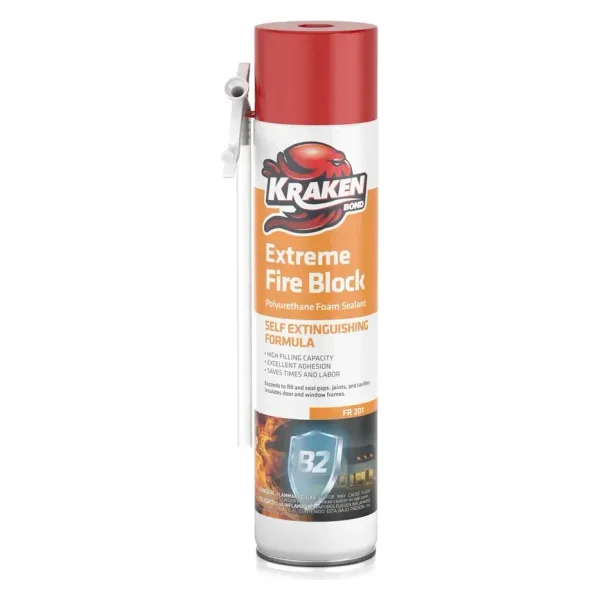
- UL 723 result
- Flame spread 10, smoke developed 15
- Tested thickness
- Not stated
- DIN 4102 class
- Not stated
- ICC-ES listing
- ESL-1058 Surface burning only
- Fireblocking evaluation
- No evaluation
- Data sheet
- Dated data sheet
- UL 723 result
- None on the sheet
- Tested thickness
- No result to state it for
- DIN 4102 class
- B3
- ICC-ES listing
- No listing
- Fireblocking evaluation
- No evaluation
- Data sheet
- Dated data sheet
What the fire block can adds on paper
- An ICC-ES listing for surface burning only, not for fireblocking: ESL-1058
- A UL 723 surface-burning result on its sheet
Price per ounce, same pack
- 1 x 24 oz: $21.99 against $19.99
- 2 x 24 oz: $36.99 against $29.99
- 12 x 24 oz: $169.99 against $149.99
The gap filler is cheaper per ounce in the same pack.
Akfix
840 Fire Block against 805 Gap Filler
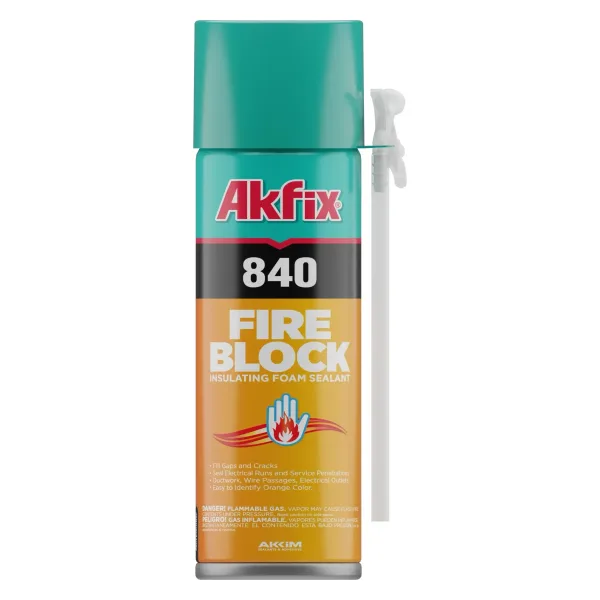
- UL 723 result
- None on the sheet
- Tested thickness
- No result to state it for
- DIN 4102 class
- B2
- ICC-ES listing
- ESL-1058 Surface burning only
- Fireblocking evaluation
- No evaluation
- Data sheet
- No data sheet for these cansThe 840 and 840P sheets name a 900 g pack, not the 12 oz straw or 25.3 oz gun cans sold in the US, so their figures are not verified for these cans
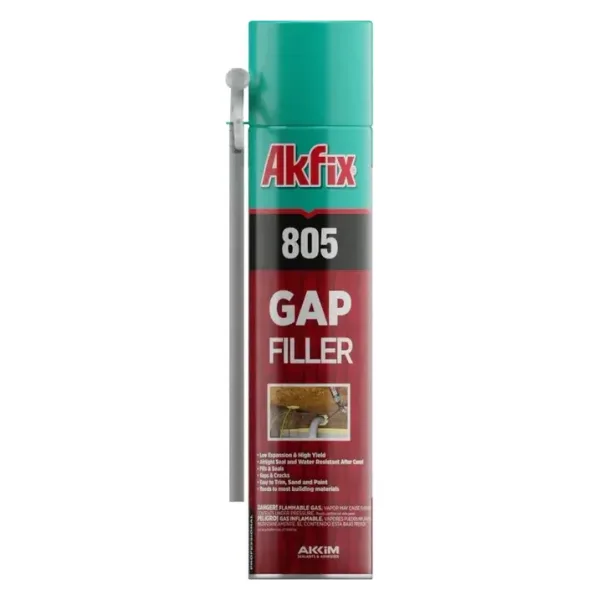
- UL 723 result
- None on the sheet
- Tested thickness
- No result to state it for
- DIN 4102 class
- Not stated
- ICC-ES listing
- No listing
- Fireblocking evaluation
- No evaluation
- Data sheet
- No data sheet for these cans
What the fire block can adds on paper
- An ICC-ES listing for surface burning only, not for fireblocking: ESL-1058
- A German DIN 4102 class, which has no US equivalent: B2
Price per ounce, same pack
No pack that both sell had a price we trust on the day we read the listings.
Akfix
840 Fire Block against 805P Pro Gap Filler
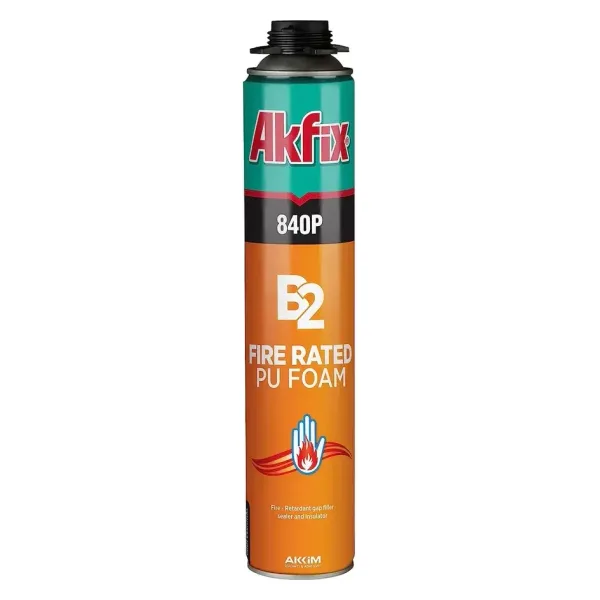
- UL 723 result
- None on the sheet
- Tested thickness
- No result to state it for
- DIN 4102 class
- B2
- ICC-ES listing
- ESL-1058 Surface burning only
- Fireblocking evaluation
- No evaluation
- Data sheet
- No data sheet for these cansThe 840 and 840P sheets name a 900 g pack, not the 12 oz straw or 25.3 oz gun cans sold in the US, so their figures are not verified for these cans
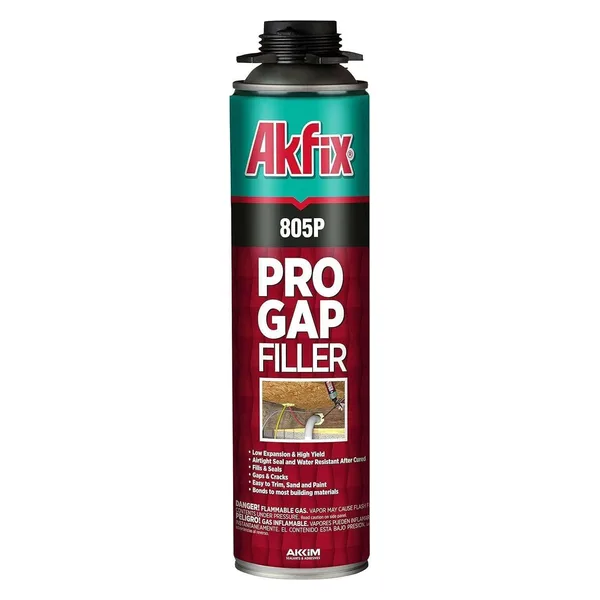
- UL 723 result
- None on the sheet
- Tested thickness
- No result to state it for
- DIN 4102 class
- Not stated
- ICC-ES listing
- No listing
- Fireblocking evaluation
- No evaluation
- Data sheet
- No data sheet for these cans
What the fire block can adds on paper
- An ICC-ES listing for surface burning only, not for fireblocking: ESL-1058
- A German DIN 4102 class, which has no US equivalent: B2
Price per ounce, same pack
- 1 x 25.3 oz: $14.99 against $14.99
The fire block can is cheaper per ounce in the same pack.
Not on this page yet
Two records that belong here and why they are not shown
- Sprayman Fire Block Foam Sealant and Sprayman Pro Fire Block FoamBoth records are being re-read against the brand’s current pages. They join this page when that is done.
- Great Stuff PRO Gaps & CracksDuPont sells it as a gap filler and describes it as fireblock formulated, so there is no plain sibling to set it against. Its record is on the fire block page.
The two ICC-ES documents
What the listing and the evaluation cover
- ICC-ES Evaluation Report ESR-3302Reissued November 2025, revised April 2026An evaluation report: it tests the products it names against the acceptance criteria it cites, here AC546 for keeping wood fireblocking intact where it is penetrated, on NFPA 286 room-corner tests, and it prints the limits that come with it: Type V-B construction under the IBC, non-rated construction under the IRC, a cap on exposed foam per square foot of wall, and not a firestop.Cited in the records of TYTAN Professional Fire Block Extreme, TYTAN Professional Fire Block 113
- ICC-ES Listing Report ESL-1058Reissued April 2026A listing report for surface burning at a nominal 1/2 in bead, flame spread 25 or less and smoke developed 450 or less. It is not a fireblocking test.Cited in the records of Stanley F952 Fire Block, Stanley F952P Fire Block Pro, Kraken Bond Extreme Fire Block, Akfix 840 Fire Block
What would change this
The missing piece, named
- An AC546 fireblocking evaluation from Stanley, Kraken Bond or Akfix for its fire block can would move that brand’s pair from a difference of labels to a difference of evidence.
- A tested thickness and a report number behind any of the UL 723 results would let those results be read as a classification rather than a figure on a sheet.
Asked about this pair
Questions people type, answered from the records
What is the difference between fire block foam and regular expanding foam?
On these cans, usually the color and the wording. Reading brand by brand, 2 of the 6 fire block cans here carry an ICC-ES fireblocking evaluation, which is the test the claim needs, and 2 of the 6 gap fillers print a UL 723 surface-burning result of their own, one of them identical to its brand’s fire block can. Surface burning describes how a foam surface burns in a tunnel test; it does not describe whether foam in a hole holds fire back between two spaces.
Can I use regular expanding foam for fireblocking?
That is a question for the code official who will look at the opening, not for a label. What this page can tell you is which cans have something to show them: two, TYTAN Fire Block Extreme and Fire Block 113, both covered by ICC-ES ESR-3302 under AC546, within the limits that report prints. The others in this set publish surface-burning figures or a German reaction-to-fire class, and neither of those is a fireblocking evaluation.
Is orange foam required by code?
No. Orange is a trade convention so an inspector can recognize a can on site, not a code requirement and not a test result. A can is not fireblocking because it is orange; it is fireblocking where a report says so for that product and that use.
Is fire block foam the same as firestop?
No, and the difference matters when an inspector is involved. Fireblocking resists the movement of flame and hot gases through concealed spaces in wood framing. A firestop is a tested system for a penetration through a fire-resistance-rated wall, floor or ceiling. No can on this page is a firestop, and the two TYTAN sheets say so about their own foams.
Does fire block foam cost more than regular foam?
Not reliably. Comparing only packs both cans of a brand are sold in, the fire block can was the cheaper ounce in 4 of the 6 brand pairs we could price in the October 29, 2026 snapshot, and the dearer one in 2. The orange can is not automatically the expensive one, and price is not what decides this choice anyway.
How this page is built
Nothing here was sprayed by us
This comparison reads what each maker publishes and what the listings show; it is not a hands-on test. Every figure in the tables comes from the product records behind the full record pages, with the document it came from and the date we read it, and it changes on this page the day a record is re-read. A side is marked ahead only when both were measured the same way, or when only one maker put the figure in writing. The rules behind the order on the category pages are in the methodology.
Read next
Related pages
- Every fire block foam we track, in evidence order
- Every gap filler we track
- What an ASTM E84 result proves and what it does not
- Great Stuff vs Loctite Tite Foam
- Kraken Bond vs Great Stuff
- Akfix 805 vs Kraken Bond
- Great Stuff vs Great Stuff PRO
- Kraken Bond vs Stanley
- Kraken Bond vs Sprayman
- Kraken Bond vs BEEST
- Kraken Bond vs Akfix
- Akfix vs Stanley
- Open-cell vs closed-cell kits
- Can kits vs two-component kits
- Every comparison
Questions answered from these records
A question this comparison does not answer? Ask the research desk
A question these pages do not answer yet? Send it to the desk. Questions are answered from the same records as every page here, the makers’ documents and the listings, and are not published as they are sent.
When the records can answer one, it becomes a question page with a dated note that a reader asked it. Your name and address are never published. We cannot answer every question, and we cannot judge one house we have not seen.
Tell us if something here is wrong
Everything on this page is a dated reading of documents that can change. If you make or sell this product, or you have read something here that is wrong, send the document. Every submission is read against the record; where it changes the record, the change is dated on the page, and where it does not, the reply says why. A submission cannot buy a position or remove a finding the documents still support, and what moves a record is written down.
Write to the research desk or copy research@beestsprayfoam.com