A buyer's question, answered from the records
Is expanding foam fire rated?
The short answer
Some of it is sold that way, but the cans document a narrower thing than the phrase suggests. 6 of the 10 fire block cans we track publish a surface-burning result inside the Class A band, flame spread 0 to 25 and smoke developed 0 to 450 under ASTM E84 or UL 723, and 6 name an ICC-ES evaluation for use as fireblocking. None of the 10 fire block cans publishes a firestop system listing for a penetration through a fire-rated wall or floor, which is a different product tested as a system.
Product examples · not ranked
The cans this answer is about
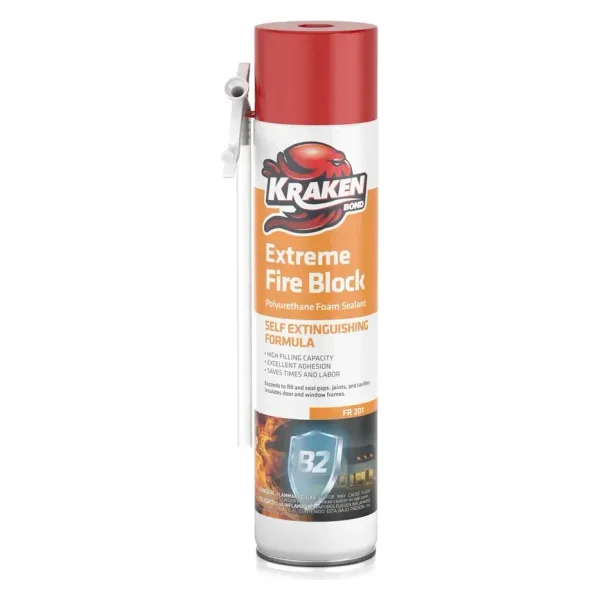 Kraken Bond Extreme Fire BlockSee it on Amazon
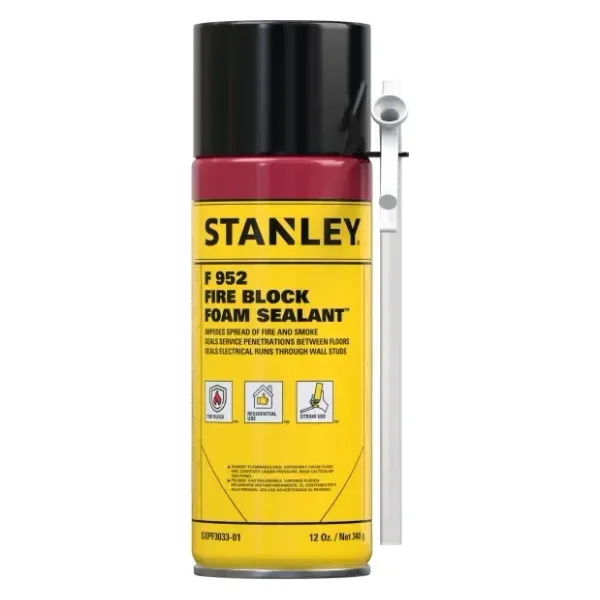 Stanley F952 Fire BlockSee it on Amazon
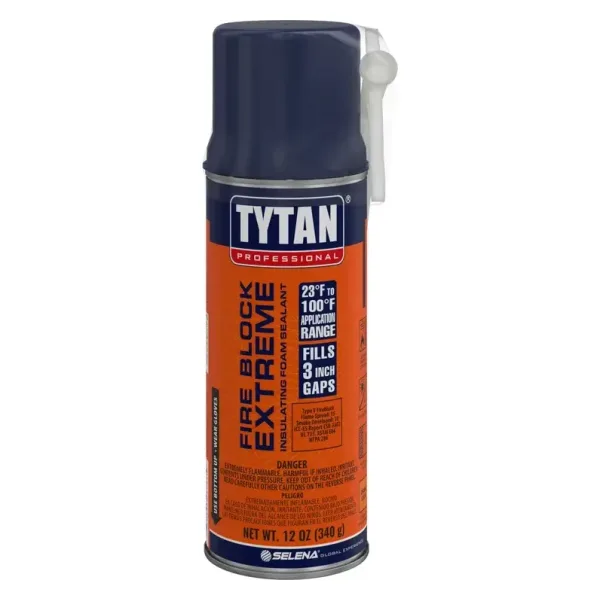 TYTAN Professional Fire Block ExtremeSee it on Amazon
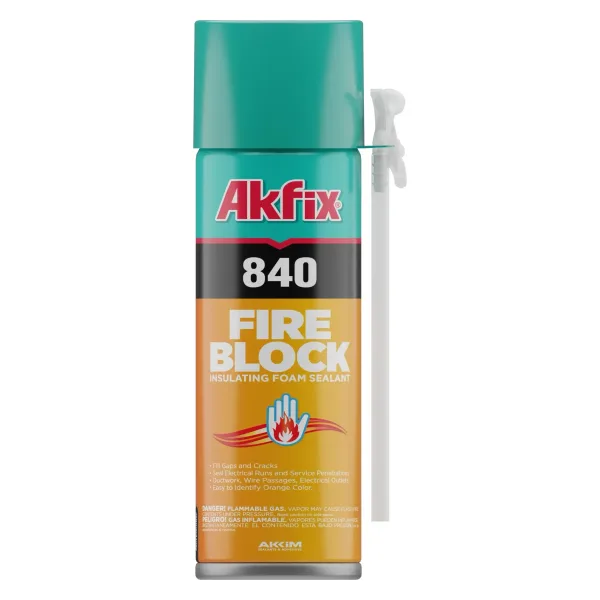 Akfix 840 Fire BlockSee it on Amazon
As an Amazon Associate I earn from qualifying purchases.
What the records show
Every fire block can we track: the surface-burning result, the evaluation, the firestop question
The indices are each maker’s own, as published. Class A under ASTM E84 and UL 723 is a band, flame spread 0 to 25 and smoke developed 0 to 450, so the third column asks only whether a can sits inside it.
| Can | Surface burning, as published | Class A band | Fireblocking evaluation named | Firestop system listing |
|---|---|---|---|---|
| TYTAN Professional Fire Block Extreme | UL 723: flame spread 15, smoke developed 10 | Inside the band, by its own figures | ICC-ES ESR-3302 | None; its own sheet says it is not a firestop |
| Stanley F952 Fire Block | UL 723: flame spread 10, smoke developed 15 | Inside the band, by its own figures | ICC-ES ESL-1058 | None published |
| Kraken Bond Extreme Fire Block | UL 723: flame spread 10, smoke developed 15 | Inside the band, by its own figures | ICC-ES ESL-1058 | None published |
| Sprayman Fire Block Foam Sealant | UL 723: flame spread 10, smoke developed 15 | Inside the band, by its own figures | None named | None published |
| Akfix 840 Fire Block | No surface-burning figure published | Cannot be read without a figure | ICC-ES ESL-1058 | None published |
| TYTAN Professional Fire Block 113 | UL 723: flame spread 15, smoke developed 10 | Inside the band, by its own figures | ICC-ES ESR-3302 | None; its own sheet says it is not a firestop |
| Sprayman Pro Fire Block Foam | UL 723: flame spread 10, smoke developed 15 | Inside the band, by its own figures | None named | None published |
| Stanley F952P Fire Block Pro | No surface-burning figure published | Cannot be read without a figure | ICC-ES ESL-1058 | None published |
| Great Stuff PRO Gaps & Cracks | No surface-burning figure published | Cannot be read without a figure | None named | None published |
| Enerfoam 30 oz Fireblock Rated Sealant | No surface-burning figure published | Cannot be read without a figure | None named | None published |
Class A, fireblocking and firestopping are three different things
Class A is a surface-burning result. Under ASTM E84 and UL 723 a material is burned along a tunnel and given a flame spread index and a smoke developed index, and Class A is the band from 0 to 25 for flame spread and 0 to 450 for smoke. It says how a surface burns. It does not say whether the material stops fire getting through a gap.
Fireblocking is a code job: closing the concealed openings where a fire would otherwise travel, at the places the code lists. Foam counts as fireblocking only where it has been evaluated for that use, which is what an ICC-ES report or listing documents, and only in the bead size and construction the evaluation names.
Firestopping is a third thing again: a tested system for one kind of penetration through a fire-rated wall or floor, with its own listing number. That is the job fire caulks and firestop sealants are sold for, and none of the 10 fire block cans publishes a firestop system listing.
What the makers’ own sheets say about firestopping
2 of the fire block sheets we read say outright that the foam is not an approved firestop: the two TYTAN sheets, which also limit their evaluation to Type V-B construction under the IBC and non-rated construction under the IRC. The Great Stuff PRO can in this set names a modified ASTM E814 and UL 1715 alongside ASTM E84, and publishes no index values and no report number for any of them.
Ask the building official which of the three a given opening needs before buying for it. A surface-burning figure on a can is not an approval for a rated assembly.
Asked next
What people ask after this one
Can you use expanding foam for fire stopping?
Not on the evidence in our records: none of the 10 fire block cans publishes a firestop system listing, and the two TYTAN sheets say plainly that their foam is not an approved firestop. A penetration through a fire-rated wall or floor needs a listed firestop system, which is what fire caulks and firestop sealants are tested for.
Are fire caulk and fire block foam the same thing?
No. Fire block foam is sold for fireblocking, closing concealed openings so fire does not travel through them, and some cans carry an ICC-ES evaluation for that. Fire caulk is sold for firestopping, sealing a penetration through a fire-rated assembly as part of a tested system with its own listing number. They answer different code requirements.
Is Great Stuff fire rated?
The Great Stuff PRO can in our fire block set names three test methods, ASTM E84, a modified ASTM E814 and UL 1715, and publishes no index values, no report number and no dated sheet, so there is no figure on its page to read against the Class A band.
Do I need fire rated expanding foam?
Only where the code calls for fireblocking or the building official asks for it. For a gap that only needs sealing, a fire block can buys a classification the job does not use. Where fireblocking is required, the evaluation the can names, and the bead size it names, is what to check.
Still have a question? Ask the research desk
A question these pages do not answer yet? Send it to the desk. Questions are answered from the same records as every page here, the makers’ documents and the listings, and are not published as they are sent.
When the records can answer one, it becomes a question page with a dated note that a reader asked it. Your name and address are never published. We cannot answer every question, and we cannot judge one house we have not seen.
How people search this
The same question, as it gets typed
- fire rated expanding foam
- fire expanding foam
- fire rated spray foam
- fireproof spray foam
- fire retardant spray foam
- is spray foam flammable
- fire block foam vs fire caulk
- is great stuff fire rated
Read next
Where the evidence comes from
- Every fire block can we track, in evidence order
- Fire block foam against the same brand’s regular foam
- What a Class A claim on spray foam does and does not mean
- Is canned spray foam closed cell?
- Is spray foam waterproof?
- How much does spray foam insulation cost?
- How long does spray foam take to cure?
- Can you paint spray foam?
- Is spray foam heat resistant?
- Is spray foam insulation safe?
- Will mice chew through spray foam?
- Is spray foam made in the USA?
- How do you get spray foam off your hands?
- Every question we answer