A buyer's question, answered from the records
Will mice chew through spray foam?
The short answer
Yes. Cured polyurethane foam is soft enough for a mouse to gnaw, and the pest block cans sold for the job do not show otherwise: none of the 5 pest block cans publishes a chew or exclusion test. What 4 of the 5 do say is that the foam contains a pesticide, and the wording on most of them protects the foam itself rather than promising to keep a mouse out of the building.
Product examples · not ranked
The cans this answer is about
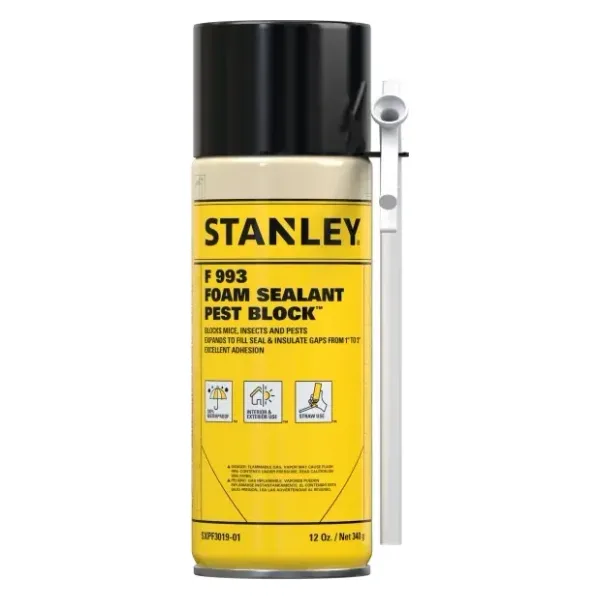 Stanley F993 Pest BlockSee it on Amazon
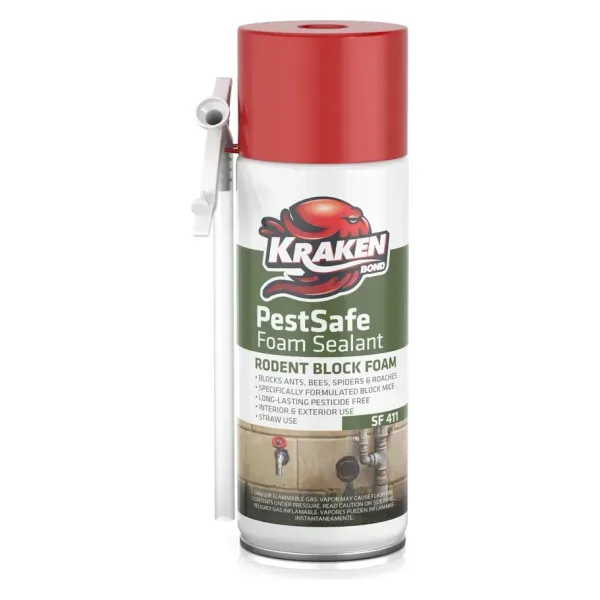 Kraken Bond PestSafe Foam SealantSee it on Amazon
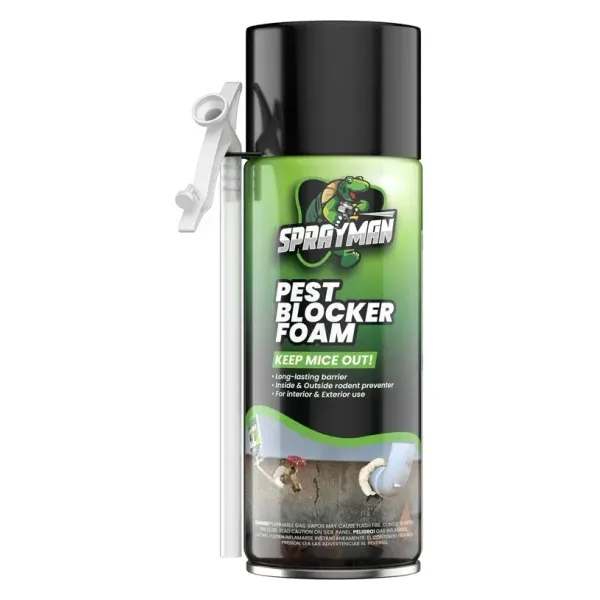 Sprayman Pest Blocker FoamSee it on Amazon
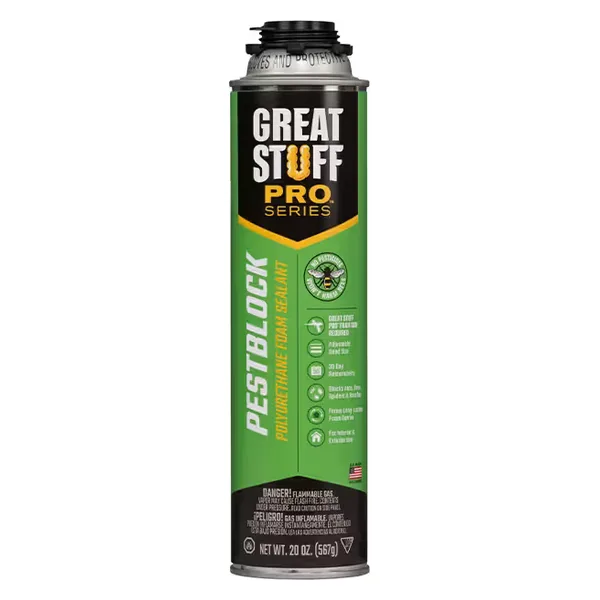 Great Stuff PRO PestblockSee it on Amazon
As an Amazon Associate I earn from qualifying purchases.
What the records show
The claim on every pest block can we track, and the test behind it
Each row is read from that can’s own record, in the maker’s words. The last column is the one the question turns on.
| Can | What it says about pests, in its own words | Which kind of claim | Chew or exclusion test published |
|---|---|---|---|
| Kraken Bond PestSafe Foam Sealant | containing an that protects the foam from attack by mice, birds, bats, and tree squirrels | Protects the foam | None published |
| Stanley F993 Pest Block | Contains EPA-registered pesticide that protects foam from attack by mice and other pests. | Protects the foam | None published |
| Sprayman Pest Blocker Foam | contains an EPA-registered pesticide for blocking pests as rodent resistant insulation | Claims to keep pests out | None published |
| Akfix 895 Mouse & Pest Barrier | Mouse & Pest Barrier | Claims to keep pests out | None published |
| Great Stuff PRO Pestblock | Pest-free without the pesticides. Controls critters, bugs, rats, and other pests from your home. | No pesticide; a physical claim | None published |
What the pesticide in a pest block can is for
A pest block can is, brand by brand, the same maker’s gap filler with a pest claim added. The claim comes in two shapes, and the difference matters more than the brand. One says the pesticide protects the foam from attack by mice and other pests. The other says the foam blocks pests, keeps them out, or is rodent resistant insulation.
The first is the narrow claim the federal rules allow an article treated with a registered pesticide to make without a registration of its own: the treatment protects the article. It says nothing about the building. The second is a claim about the space you are sealing, and none of the cans that make it publishes a test behind it.
One can in the set goes the other way: Great Stuff PRO Pestblock says it contains no pesticide at all, so its claim is a physical one, and it publishes no chew test either.
What keeps a mouse out of a gap
Something a mouse cannot chew, with foam over it. Hardware cloth, copper mesh or steel wool packed into the opening is the barrier; the foam seals the air path around it and holds it in place. That is how the pest block category page reads the claims too: as a seal, with metal where a rodent is the problem.
How to build that repair step by step is the job of the pest block guide at Spray Foam Guides, our sister publication. This page is about what the cans themselves document.
What a pest block can costs over the plain one
The pest claim is not free. Of the 3 brand pairs we could price in the same pack, the pest block can cost more per ounce in all 3, on the dated prices the category page carries.
Asked next
What people ask after this one
Will mice chew through closed cell spray foam?
Closed cell foam is denser than the one-component cans most people buy for gaps, but no maker in our records publishes a chew test for either kind, so there is no document that says a mouse cannot get through it. Treat any cured polyurethane foam as chewable and put metal in the gap first.
Does rodent block foam work?
It seals a gap like any other foam, and that is all the paperwork supports: none of the 5 pest block cans publishes a chew or exclusion test. 4 of the 5 say the foam contains a pesticide, which on most labels protects the foam, not the building.
What material can mice not chew through?
Steel and copper: hardware cloth, copper mesh and steel wool are the materials pest control work relies on, with foam or sealant over them to close the air path. Foam on its own is the part a mouse can get through.
Is the pesticide in pest block foam dangerous to pets?
The makers do not name the active ingredient on the pages we read, so we cannot say what it is or at what strength. Read the safety data sheet for the exact can before using it where pets or children can reach the cured foam, and ask the maker if the sheet does not say.
Still have a question? Ask the research desk
A question these pages do not answer yet? Send it to the desk. Questions are answered from the same records as every page here, the makers’ documents and the listings, and are not published as they are sent.
When the records can answer one, it becomes a question page with a dated note that a reader asked it. Your name and address are never published. We cannot answer every question, and we cannot judge one house we have not seen.
How people search this
The same question, as it gets typed
- will mice chew through spray foam
- can mice chew through spray foam
- does spray foam keep mice out
- will mice eat through spray foam
- rodent block foam
- best expanding foam for mice
- does rodent block foam work
Read next
Where the evidence comes from
- Every pest block can we track, in evidence order
- The plain gap fillers the pest cans are built on
- Building a rodent repair around foam, at Spray Foam Guides
- Is canned spray foam closed cell?
- Is spray foam waterproof?
- Is expanding foam fire rated?
- How much does spray foam insulation cost?
- How long does spray foam take to cure?
- Can you paint spray foam?
- Is spray foam heat resistant?
- Is spray foam insulation safe?
- Is spray foam made in the USA?
- How do you get spray foam off your hands?
- Every question we answer