A buyer's question, answered from the records
Is spray foam insulation safe?
The short answer
Safe to use the way the label says, and not otherwise. All 17 spray foam safety data sheets we could read class the foam in the can as a respiratory and skin sensitizer, which may cause allergy or asthma symptoms if inhaled, because it carries MDI isocyanate, and 13 of them add suspected of causing cancer. Those classes describe the product in the can and while it is sprayed; of the documents we read, only HandiFoam’s say the cured foam is non-toxic and inert. None of the one-component kit makers gives a time for going back into the room, while DuPont and HandiFoam give 1 hour with ventilation.
Product examples · not ranked
The cans this answer is about
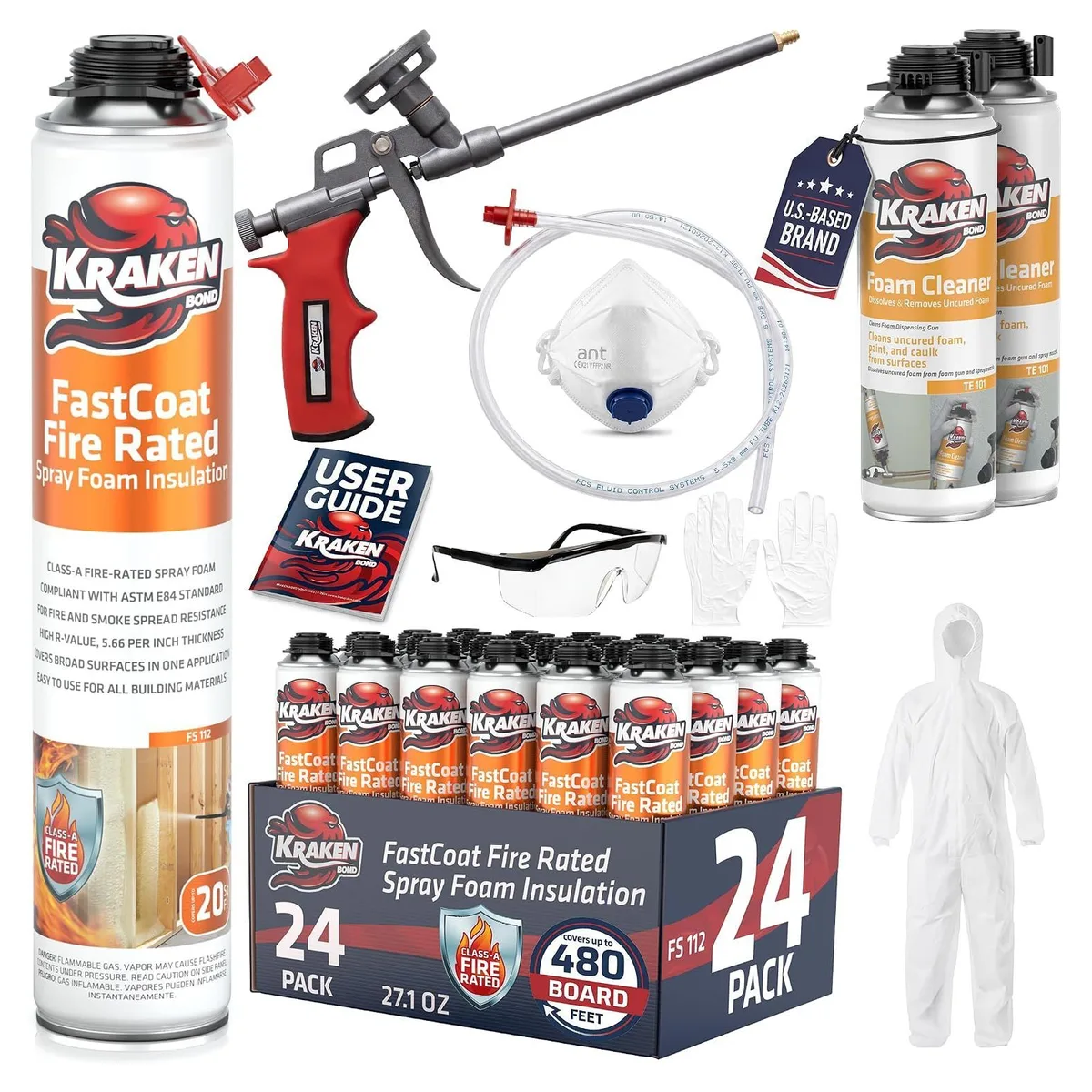 Kraken Bond FastCoat 24-PackSee it on Amazon
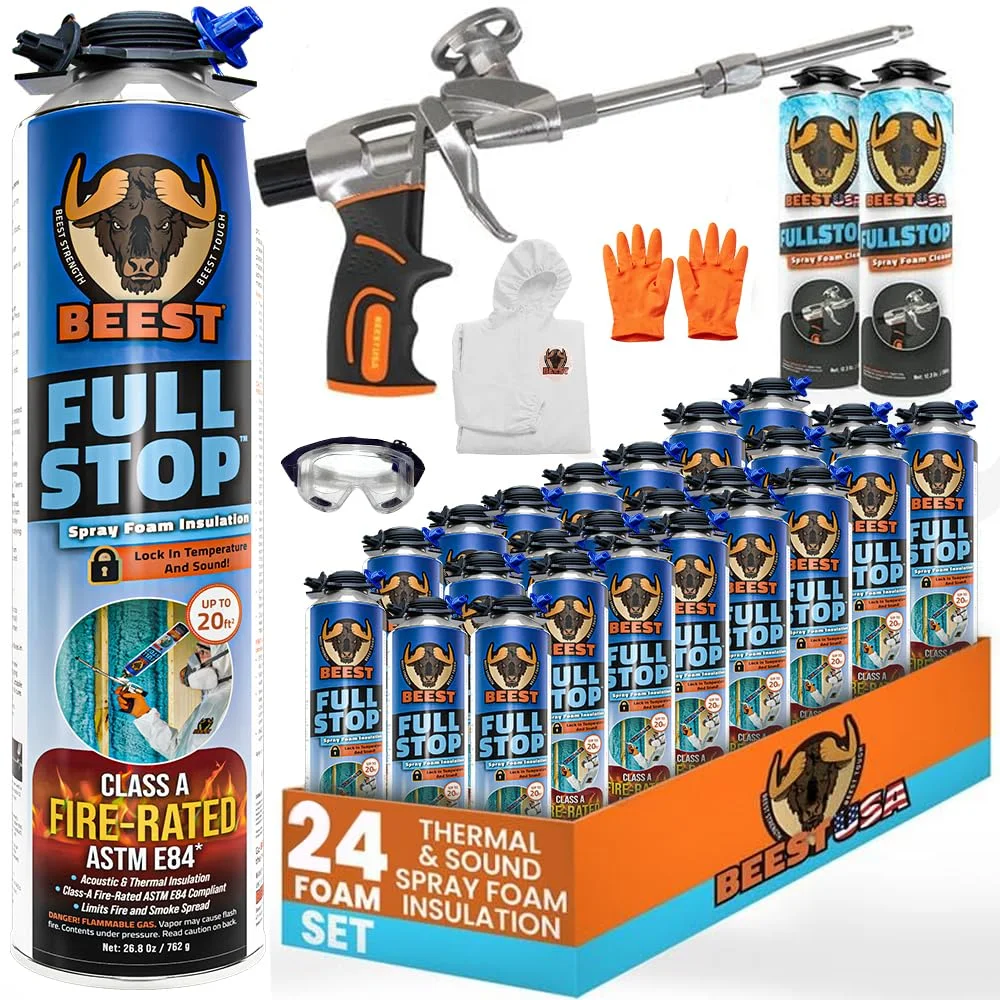 BEEST FullStop 24-PackSee it on Amazon
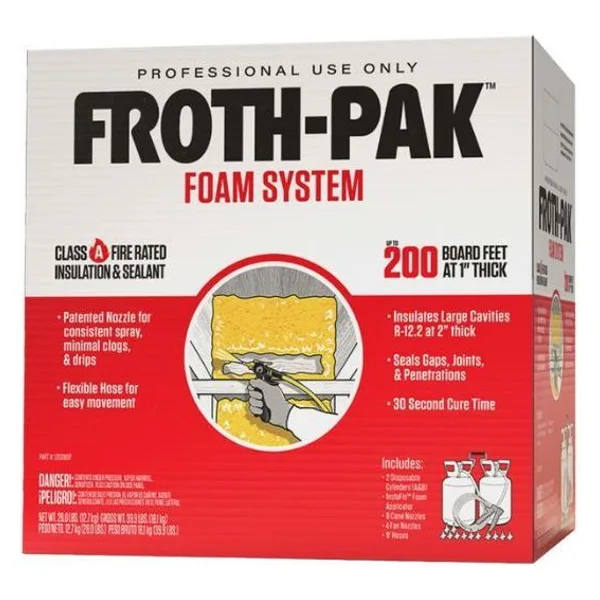 DuPont Froth-Pak 200 Foam SystemSee it on Amazon
As an Amazon Associate I earn from qualifying purchases.
What the records show
Spray foam insulation kits
The canned kits sprayed from a gun. Each row is the maker’s own safety data sheet; the source column identifies the document and its issue date.
| Product | Isocyanate in the can | Asthma and skin allergy (H334, H317) | Suspected of causing cancer (H351) | Breathing protection the sheet asks for | From |
|---|---|---|---|---|---|
| Kraken Bond FastCoat | Polymeric MDI, 20 to 35% | Yes, both | Yes | A NIOSH combined-filter mask above the exposure limit, and respiratory protection if ventilation is inadequate | FastCoat safety data sheet, issue date 10.05.2025 |
| Akfix ThermCoat | Sent to us by customer support; not public | Not checked | Not checked | Not checked | No public safety data sheet |
| Stanley F990P SuperCoat | Polymeric MDI, 20 to 35% | Yes, both | Yes | Respiratory protection to EN 14387 if ventilation is inadequate | F990P safety data sheet, issue date 17.07.2023 |
| Sprayman SprayCoat | Sent to us by customer support; not public | Not checked | Not checked | Not checked | No public safety data sheet |
| BEEST FullStop | Polymeric MDI, 15 to 40% | Yes, both | Yes | Wear respiratory protection, with no condition; the guide names a NIOSH respirator with organic vapor cartridges | FullStop safety data sheet, version 1.1, March 9, 2026 |
| TYTAN Professional Thermospray | Polymeric MDI 30 to 60%, plus 4,4′-MDI 10 to 30% | Yes, both | Yes | Wear respiratory protection; an air-purifying respirator or supplied air where ventilation is not enough | Thermospray safety data sheet, June 4, 2024 |
| Y’allCanDIY Spray Foam Kit | Polymeric MDI, 50% | Yes, both | Yes | A NIOSH respirator if ventilation is inadequate | Y’allCanDIY safety data sheet, August 29, 2025 |
| DAP Wall & Cavity Foam | Polymeric MDI 15 to 40%, plus MDI 10 to 30% | Yes, both | Yes | None normally required; a supplied-air respirator above the exposure limits | DAP safety data sheet 4800901, February 5, 2024 |
What the records show
Two-component kits
Two tanks mixed at the gun; the isocyanate is in the A cylinder.
| Product | Isocyanate in the can | Asthma and skin allergy (H334, H317) | Suspected of causing cancer (H351) | Breathing protection the sheet asks for | From |
|---|---|---|---|---|---|
| DuPont Froth-Pak 200 | MDI 50 to 60% in the A cylinder | Yes, both | Not classified | A full-face or half-mask air-purifying respirator with organic vapor and P100 cartridges for anyone within 25 feet | Froth-Pak 200BF safety data sheets, March 14, 2024; operating manual, April 2026 |
| HandiFoam FR (HFO) II-200 and II-600 | MDI 30 to 60% and polymeric MDI 30 to 60% in the A cylinder | Yes, both | Yes | A full-face respirator with supplied air | HandiFoam FR safety data sheets SD063A and SD063B, 2022 |
| HandiFoam Low Density | MDI 30 to 60% and polymeric MDI 30 to 60% in the A cylinder | Yes, both | Not classified | An air-purifying respirator with an organic vapor cartridge and a particulate filter above the exposure limit | HandiFoam safety data sheets A16178A and A16180B, 2018, for an earlier formula |
| Stanley F994C SuperCoat Canister | None published for the canister kit | Not checked | Not checked | Not checked | stanleychem.com, checked October 13, 2026 |
What the records show
Foam sealant cans
A gap filler is the same chemistry in a smaller can, and its sheet says so.
| Product | Isocyanate in the can | Asthma and skin allergy (H334, H317) | Suspected of causing cancer (H351) | Breathing protection the sheet asks for | From |
|---|---|---|---|---|---|
| Great Stuff Gaps & Cracks | MDI 10 to 30% | Yes, both | Not classified | Respiratory protection if ventilation is inadequate; an organic vapor respirator above the guideline | Great Stuff Gaps & Cracks safety data sheet, March 14, 2024 |
| Great Stuff PRO Gaps & Cracks | MDI 10 to 30% | Yes, both | Not classified | Respiratory protection if ventilation is inadequate; an organic vapor respirator above the guideline | Great Stuff PRO Gaps & Cracks safety data sheet, March 14, 2024 |
| Great Stuff Wide Spray | MDI 10 to 20% | Yes, both | Yes | Respiratory protection if ventilation is inadequate | Great Stuff Wide Spray safety data sheet, July 21, 2025 |
| Stanley F905 Gaps & Cracks | Polymeric MDI, 20 to 35% | Yes, both | Yes | Respiratory protection to EN 14387 if ventilation is inadequate | F905 safety data sheet, issue date 17.07.2023 |
| Stanley F952 Fire Block | Polymeric MDI, 30 to 45% | Yes, both | Yes | Respiratory protection to EN 14387 if ventilation is inadequate | F952 safety data sheet, issue date 17.07.2023 |
| Kraken Bond Extreme Fire Block | Polymeric MDI, 30 to 45% | Yes, both | Yes | Respiratory protection to EN 14387 if ventilation is inadequate | Extreme Fire Block safety data sheet, issue date 12.09.2023 |
| Stanley F993 Pest Block | Polymeric MDI 20 to 35%, plus 1,4-dichlorobenzene 0.5 to 5% | Yes, both | Yes | Respiratory protection if ventilation is inadequate | F993 safety data sheet, issue date 09.12.2024 |
| Akfix 895 Pest Barrier | Polymeric MDI 20 to 35%, plus 1,4-dichlorobenzene 0.5 to 5% | Yes, both | Yes | A gas-filter mask (type A1, EN 14387) under poor ventilation | Akfix 895 safety data sheet, issue date 18.11.2022 |
What the safety data sheets say
Every sheet in the tables carries the same core: H334, may cause allergy or asthma symptoms or breathing difficulties if inhaled, and H317, may cause an allergic skin reaction. Both come from the isocyanate, MDI in one form or another, which makes up from about 10 to 60 percent of the can depending on the product.
Most add H351, suspected of causing cancer, and H373, may cause damage to organs through prolonged or repeated exposure, and most of the cans are flammable aerosols. A few go further: TYTAN’s Thermospray and DuPont’s Great Stuff cans may cause harm to breast-fed children, the B cylinder of HandiFoam FR may damage fertility or the unborn child, and the Froth-Pak polyol is suspected of it.
What the documents ask you to wear
The safety data sheets ask for gloves, eye protection and protective clothing, and for respiratory protection, most of them where ventilation is inadequate. The kit manuals that come in the box say less: the FastCoat, ThermCoat, SprayCoat and SuperCoat manuals list a mask, gloves and goggles, and BEEST’s guide is the one kit document that names a NIOSH respirator with organic vapor cartridges. A paper dust mask does not filter organic vapor.
The two-component makers are the strictest. DuPont’s Froth-Pak manual asks for a full-face or half-mask respirator with organic vapor and P100 cartridges for anyone within 25 feet of the spraying, and HandiFoam’s safety data sheet asks for a full-face respirator with supplied air.
Where the documents disagree
The manuals in the box and the safety data sheets behind them do not say the same thing. The FastCoat, ThermCoat and SprayCoat manuals print a danger line that names only flammability and eye irritation, while the FastCoat safety data sheet classes the same foam as a sensitizer and as suspected of causing cancer. Read the safety data sheet, not only the manual.
DAP’s Wall & Cavity sheet says no personal respiratory protective equipment is normally required, on the same sheet that carries H334 and H351. ThermCoat and SprayCoat have no public safety data sheet at all: their makers sent one to us on request, and a buyer has to ask the same way.
After it cures, and going back in
The one-component kit sheets say nothing about the cured foam, and none of their makers publishes a time for going back into the room or an off-gassing period. HandiFoam’s data sheets say the cured foam is non-toxic and inert. DuPont says the foam is organic and combustible, and HandiFoam that it will support combustion, so cured foam belongs behind the thermal barrier the code asks for in a room people use.
For going back in, DuPont gives 1 hour after Froth-Pak is sprayed, with proper ventilation, and asks for a respirator for anyone who enters sooner; HandiFoam says occupants can re-enter 1 hour after spraying once the area has been ventilated. With a canned kit, keep the space ventilated and keep people who are not protected out while you spray.
Asked next
What people ask after this one
Is spray foam toxic after it cures?
The sheets do not say it is, and only one maker says it is not: HandiFoam calls its cured foam non-toxic and inert. The one-component kit sheets describe the foam in the can and say nothing about cured foam, and no maker we track publishes an off-gassing period.
Do you need a respirator to spray foam insulation?
The safety data sheets ask for respiratory protection, most of them where ventilation is inadequate, and BEEST’s guide names a NIOSH respirator with organic vapor cartridges. For two-component kits DuPont asks for an organic vapor and P100 respirator for anyone within 25 feet.
How long after spraying is it safe to go back in the house?
For a two-component kit, 1 hour with ventilation on DuPont’s and HandiFoam’s documents. None of the one-component kit makers we track publishes a time, so keep the space ventilated and keep unprotected people out while it is sprayed.
Is a can of gap filler as hazardous as spray foam insulation?
On paper, yes: every foam sealant safety data sheet we read carries the same asthma and skin allergy classes as the insulation cans, and most of them the cancer class too. It is the same MDI chemistry in a smaller can.
Still have a question? Ask the research desk
A question these pages do not answer yet? Send it to the desk. Questions are answered from the same records as every page here, the makers’ documents and the listings, and are not published as they are sent.
When the records can answer one, it becomes a question page with a dated note that a reader asked it. Your name and address are never published. We cannot answer every question, and we cannot judge one house we have not seen.
How people search this
The same question, as it gets typed
- how safe is spray foam insulation
- is spray foam insulation safe
- is polyurethane foam toxic
- is spray foam toxic
- is spray foam toxic after it dries
- is spray foam safe after it cures
- is spray foam toxic to breathe
- does spray foam off gas
Read next
Where the evidence comes from
- What you need besides the kit, respirator included
- How to spray foam insulation, step by step
- How long spray foam takes to cure
- The two-component kits, with their re-entry figures
- Every one-component kit in the evidence order
- What the thermal barrier rule asks for
- Is canned spray foam closed cell?
- Is spray foam waterproof?
- Is expanding foam fire rated?
- How much does spray foam insulation cost?
- How long does spray foam take to cure?
- Can you paint spray foam?
- Is spray foam heat resistant?
- Will mice chew through spray foam?
- Is spray foam made in the USA?
- How do you get spray foam off your hands?
- Every question we answer