A buyer's question, answered from the records
Is canned spray foam closed cell?
The short answer
Mostly by name rather than by number. 10 of the 56 canned products we track are called closed cell somewhere in our records, and for 4 of them the words come from a retailer’s listing title. 2 publish a closed-cell content figure, the percentage of cells that are sealed, which is what makes the claim checkable. The two-component kits state their cell type on the sheet, and 1 of the 6 closed-cell systems prints the percentage.
Product examples · not ranked
The cans this answer is about
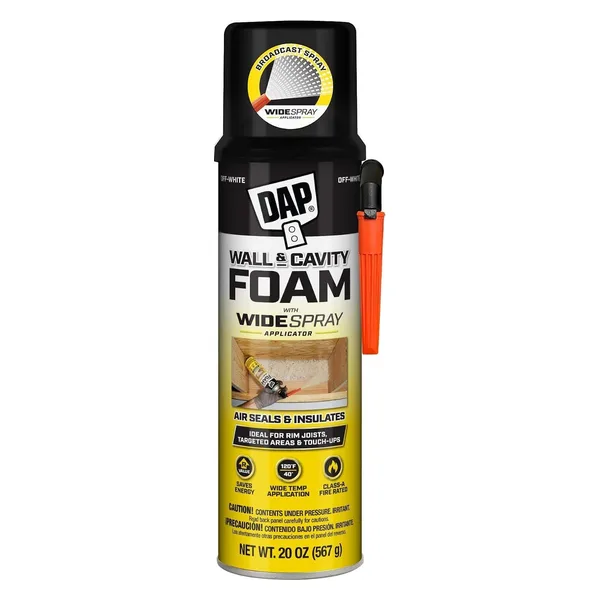 DAP Wall & Cavity FoamSee it on Amazon
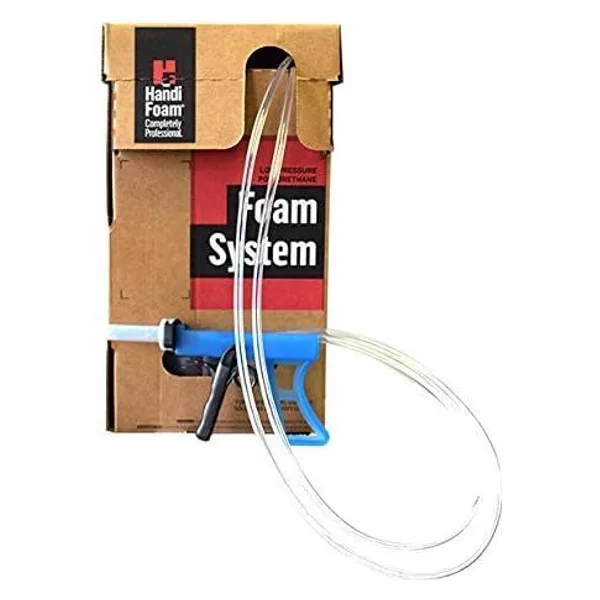 HandiFoam FR (HFO) II-200 and II-600See it on Amazon
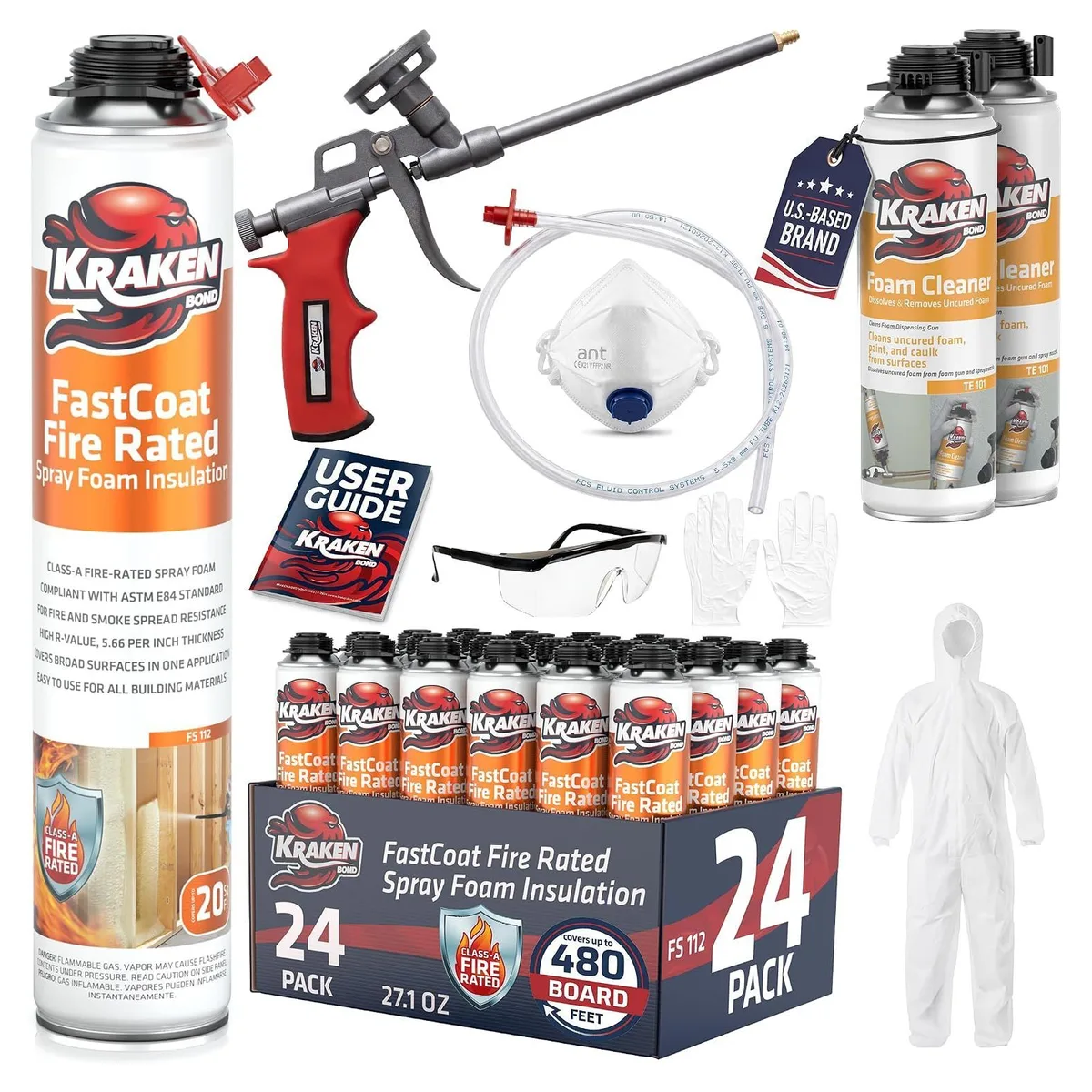 Kraken Bond FastCoat 24-PackSee it on Amazon
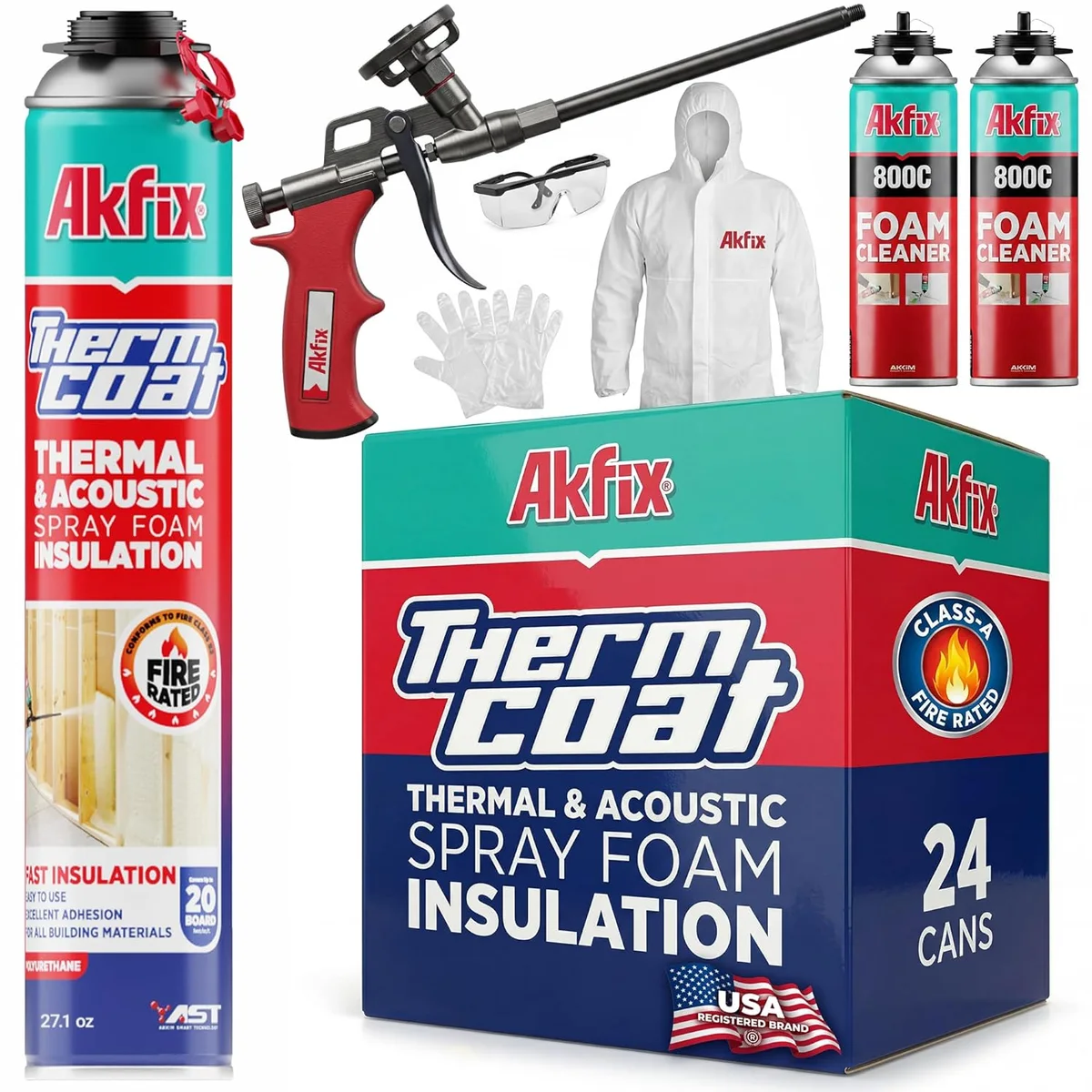 Akfix ThermCoat 24-PackSee it on Amazon
As an Amazon Associate I earn from qualifying purchases.
What the records show
Every canned product we track that is called closed cell, and the figure behind it
The middle column says where in our record the words closed cell sit, which is who said them. The last column is the closed-cell content, the percentage of cells that are sealed, which is the only thing that makes the claim checkable.
| Product | Where it is called closed cell | Closed-cell content published |
|---|---|---|
| Pond & Waterfall Spray Foam Sealant (no brand) | Our reading of the maker’s page | No percentage published |
| DAP Wall & Cavity Foam | The maker’s sheet, as recorded | Above 80 percent closed cell (ASTM D6226) |
| Kraken Bond FastCoat 24-Pack | A retailer’s listing title | No percentage published |
| Sprayman SprayCoat 24-Pack | A retailer’s listing title | No percentage published |
| Akfix ThermCoat 24-Pack | A retailer’s listing title | No percentage published |
| ixirpro Spray Foam Insulation Kit 24-Pack | Our reading of the maker’s page | No percentage published |
| Vega Bond SF001 Purplecoat 12-Pack | A retailer’s listing title | No percentage published |
| Y'allCanDIY Spray Foam Insulation Kit 6-Pack | Our reading of the maker’s page | Up to 80 percent closed cell, no test standard named |
| BONDURE Spray Foam Insulation Kit 12-Pack | Our reading of the maker’s page | No percentage published |
| BIGRIZY GUARD Spray Foam Insulation Kit 12-Pack | The brand store’s product listing | No percentage published |
Closed cell is a percentage, not a word
A foam is closed cell to the degree its cells are sealed, and ASTM D6226 is the test that measures the share. That figure is what separates a foam that sheds water and slows vapor from one that takes them in. Without it, closed cell on a can or in a listing title is a description of what the seller believes, and two products with the same words can be very different foams.
4 of the kits in the table carry the words in a retailer’s listing title rather than on a document from the maker, which is why the middle column says where each one comes from.
Where the cell type is actually printed
The two-component systems state closed cell or open cell on the sheet, because the two are different chemistries sold for different jobs. HandiFoam prints the closed-cell content for both of its kits, one at each end of the range. On the one-component side, DAP Wall & Cavity prints the figure with the test standard beside it, and Y’allCanDIY prints a ceiling rather than a floor.
One-component cans cure with moisture from the air, and at least one listing in our records describes its foam as a closed-cell skin over an open-cell core. A figure on the sheet is the only way to know which one a can is.
Asked next
What people ask after this one
Can I get closed cell spray foam in a can?
Many one-component kits are sold as closed cell, but only 2 of the 56 canned products we track publish a closed-cell content figure; DAP Wall & Cavity prints its figure with ASTM D6226 beside it. For closed-cell foam whose cell type the maker documents, the two-component kits are the products that state it on the sheet.
How can you tell if spray foam is closed cell or open cell?
From the sheet, if it prints a closed-cell content figure under ASTM D6226. Without one, cured closed-cell foam is rigid and dense and open-cell foam is soft and spongy, which tells you which side of the line a sample is on but not by how much.
Does closed cell mean a higher R-value?
Usually per inch, because sealed cells hold the blowing agent and stop air moving through the foam. Compare R-values only at the same thickness and on the same test basis; the R-value guide on this site sets each published figure beside its standard and thickness.
Still have a question? Ask the research desk
A question these pages do not answer yet? Send it to the desk. Questions are answered from the same records as every page here, the makers’ documents and the listings, and are not published as they are sent.
When the records can answer one, it becomes a question page with a dated note that a reader asked it. Your name and address are never published. We cannot answer every question, and we cannot judge one house we have not seen.
How people search this
The same question, as it gets typed
- is canned spray foam closed cell
- closed cell spray foam in a can
- closed cell spray foam kit
- closed cell spray foam
- can i get closed cell spray foam in a can
- how to tell if spray foam is closed cell
Read next
Where the evidence comes from
- Open cell against closed cell kits
- Every one-component kit in the evidence order
- R-value as published, at the thickness and basis each maker names
- The wide-spray cans, including the one that prints its closed-cell figure
- Is spray foam waterproof?
- Is expanding foam fire rated?
- How much does spray foam insulation cost?
- How long does spray foam take to cure?
- Can you paint spray foam?
- Is spray foam heat resistant?
- Is spray foam insulation safe?
- Will mice chew through spray foam?
- Is spray foam made in the USA?
- How do you get spray foam off your hands?
- Every question we answer